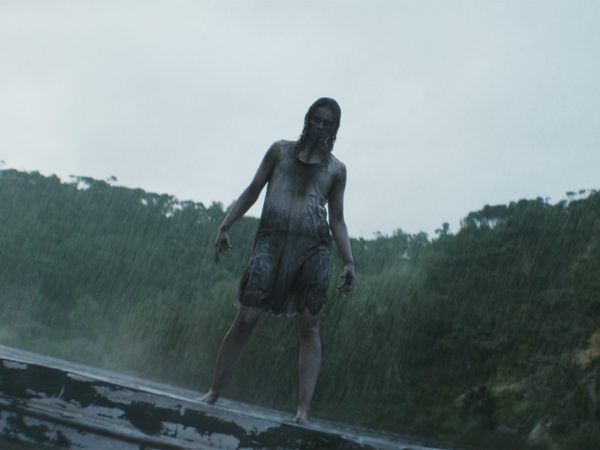
The Evil Dead universe promised a relentless cascade of carnage following the visceral success of Evil Dead Rise. After that bloody ascension, fans were eagerly awaiting a trilogy of Deadite movies. Enter director Sébastien Vaniček with Evil Dead Burn, a new chapter that attempts to continue the franchise’s dark legacy. But as this installment rolls out, it raises some serious questions about pacing, character depth, and whether a studio-driven horror film can sustain the raw intensity of its predecessors.
The narrative centers on a dysfunctional family grappling with grief, including Alice, newly widowed and visibly conflicted by her husband’s violent history; Joseph, the grieving brother; their girlfriend Thya; parents Susan and Edgar; and grandma Polly. They gather to mourn Will’s unexpected death, but instead of focusing solely on this sorrow, the film attempts to weave in themes of generational abuse using the possessed Deadites.
While much of the franchise has often prioritized visceral shock over realism, even before these reanimations occurred, some earlier entries felt like caricatures. In Evil Dead Burn, the groundwork is laid for a truly dire wake, yet the film struggles to balance the inevitable bloodshed with exhausting and clumsy character development. The pacing often feels weighed down by an insistent narrative that sacrifices momentum for thematic exploration.
The attempts to use the possession not just as a source of physical mutilation but as an explanation for generational trauma feel insincere. In a franchise where walking, talking corpses are routinely tearing themselves apart for amusement, introducing explicit metaphors about domestic violence can feel like an unnecessary layer. The narrative risks becoming bloated, struggling to stay alight amidst the spectacle.
Adding complexity is the portrayal of the Deadites themselves. While some possessors are undeniably hags who revel in black-hearted cackles, the film’s focus on these creatures feels less earned than previous entries. This development is particularly noticeable in Polly, the grandmother suffering from severe dementia, whose character is often reduced to cheap laughs rather than allowing her arc to resonate with the emotional weight of the events.
Ultimately, the biggest hurdle for Evil Dead Burn seems to be a failure to fully realize director Vaniček’s unique vision. Instead of allowing each installment to forge its own gruesome path, the film settles for a dull cohesion—relying on repetitive camera angles and predictable lore-based easter eggs that bind the films together rather than letting them explode independently.
The promise of escalating terror ultimately falls short. Despite the plenty of gore, including the introduction of a Deadite hag with Polly, the climactic showdown feels hollow. All of Alice’s suffering culminates not in a truly horrifying confrontation, but in a face-off with a final Deadite that resembles a charred silver surfer. It leaves the audience with more embers than brimstone.
Credit: Little White Lies