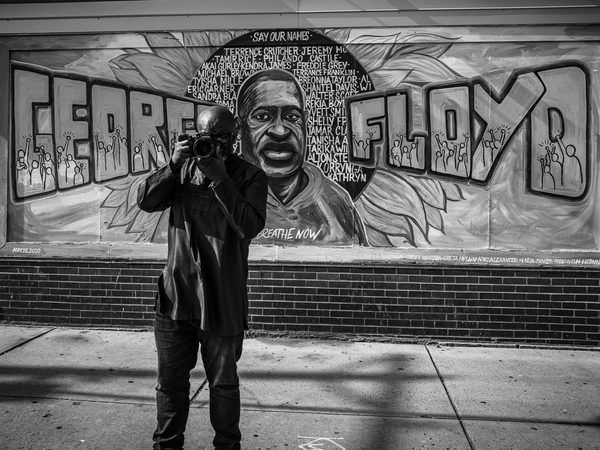
There is a philosophy that goes beyond simply capturing an image; it is about bearing witness. It is about using the camera not just as a tool for documentation, but as a weapon of testimony. This powerful ethos drives the work of photographer and activist Misan Harriman, and it forms the core narrative of Andy Mundy-Castle’s stirring documentary, Shoot the People.
The film follows Harriman’s journey, charting decades of struggle and injustice through the unflinching lens of protest photography. It explores how one generation of activists passes its legacy down to the next, emphasizing that the photographer’s most vital job is ensuring that nothing important goes unseen.
Harriman’s visual archive speaks volumes, offering a sweeping history of social movements. The film features his striking black-and-white portraits, spanning from demonstrators at pro-Palestine marches in London to mourners gathered at George Floyd’s memorial site in Minneapolis. These images serve as visceral reminders of the ongoing fight for justice.
One photograph, taken during a Black Lives Matter protest and subsequently shared by Martin Luther King III, stands out as a career defining moment for Harriman, illustrating the potent power of visual storytelling to bridge divides and ignite change.
However, the film does not shy away from the complexities inherent in Harriman’s position. It confronts the tension between documenting injustice and profiting from the social capital it generates. This conflict is highlighted when Harriman navigates exclusive spaces, such as attending the 96th Academy Awards, where his nominated work found itself juxtaposed against ongoing protests outside the venue—a poignant irony that shadows both him and the film.
The documentary extends this reflection to the broader lineage of protest photography. It offers a powerful homage to figures like South African photographer Peter Magubane, whose courageous documentation of apartheid laid essential groundwork for those who followed. By centering these earlier voices, the film positions Harriman’s work not as a solitary achievement, but as part of a larger, necessary movement.
Ultimately, Shoot the People succeeds less as a biographical portrait of a single photographer and more as an ambitious celebration of photography itself—a testament to its enduring power to capture reality, provoke thought, and demand accountability.
Credit: Little White Lies