15/18 First Look Review of A Place to Heal
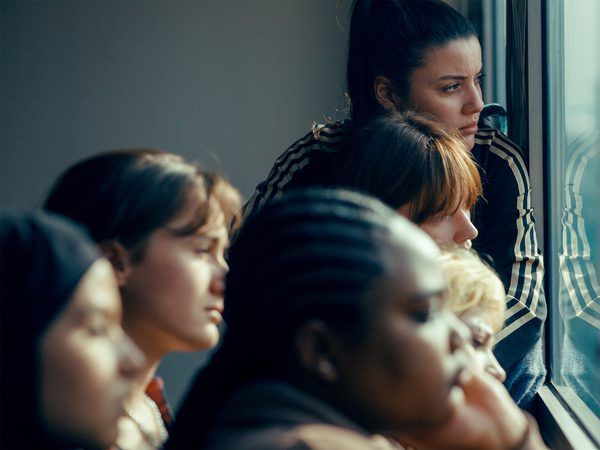
What happens when you try to treat teenage mental health within the confines of an institution? Cédric Kahn’s verité-style drama offers a radically human-first answer, transforming a psychiatric ward into a fascinating, chaotic microcosm of French society.
Set within a ward for patients aged 15 through 18, the film deliberately sidesteps the typical pathologizing often associated with mental illness. Instead of reducing these young people to mere social problems, Kahn crafts an environment where every patient is first recognized as an individual. This is less a total institution and more a unique boarding school, complete with the subtle politics of cafeteria tables and bunk-bed confessions.
Working with co-writer Kahina Le Querrec, Kahn modeled this fictional facility on those who champion a more conversational, humane approach to care. The resulting dialogues reveal a dual understanding of the traumas affecting these youths, reflecting the complex interplay of social, psychological, racial, and class factors that shape emerging trends in French society.
The narrative structure itself embodies this democratic philosophy, ensuring that each character has the space to speak for themselves while simultaneously navigating the broader social fabric. The world-building echoes the incisive observational documentary work of Frederick Wiseman, using the camera to capture the atmosphere of the ecosystem rather than relying on conventional dramatic narratives.
The focus sharpens on several compelling figures. We are introduced to Lucia, played by breakout Malou Khebizi, a firecracker whose volatile case challenges the staff. For the new intern, Jules, the experience offers a strange blend of idealism and stark reality, prompting a reevaluation of what it means to join a specialized field.
But the true tension lies in the power dynamics unfolding among the patients. Enter Enzo, the manipulative young man who seeks entry into the facility to circumvent the penal system. He embodies a sort of Randall McMurphy figure, capable of galvanizing his peers and exploiting the counselors to avoid accountability. As Enzo approaches his eighteenth birthday, the ticking clock of the law heightens the stakes.
The camera rarely stays confined to the walls, yet the most profound shift occurs when the narrative centers on Éloïse, a sexual assault survivor who emerges as the emotional core of the film. Her journey proves the film’s secondary title, A Place to Heal, demonstrating that healing often requires finding truth and safety outside the very institutions meant to contain suffering.
Buy on Amazon
Credit