Bad Apples twisted black comedy review
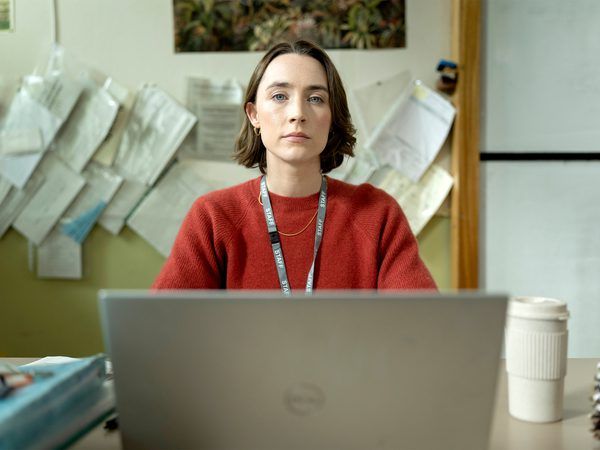
Saoirse Ronan delivers a performance that is both fragile and fiercely unhinged as she navigates a gleefully unhinged satire on a system that is simultaneously hilarious and deeply unsettling.
At the heart of the story is Maria, a primary school teacher whose overworked and frustrated reality is violently upended. Early in the narrative, Maria is adrift in a moment of wistful longing, watching children dance with ribbons, a fleeting glimpse of a simpler time. This tranquility is shattered by a sudden, visceral jolt that snaps her back to a brutal present, culminating in a moment of dark comedy that will haunt viewers long after the credits roll.
The film acts as a hilarious jolt to the system, drawing heavily on the gallows humour of Danny Boyle’s Shallow Grave and the sharp satirical bite of Alexander Payne’s Election. Set against the backdrop of a West Country school, the narrative delves into the sinister motives of British society, examining how structural issues and relentless budget cuts manifest in the lives of ordinary people.
Maria is not painted as a simple inspirational figure or a villain, but a woman experiencing profound anguish at her lowest ebb. When confronted by overstretched budgets and the crushing weight of institutional demands, her desperate measures become stark and morally complex. Her decision to take Danny hostage in her basement is a reflection of how desperation forces people to seek refuge from the chaos.
The story expertly toys with horror tropes, conveying mounting societal distrust with menacing flair while masterfully blending drama, comedy, and existential crises. The central tension lies in the realization that shoving a problem out of sight is never the solution, even when faced with the relentless pressure of educational institutions.
The film explores how everyone involved is fundamentally starved of the love and attention they require. The characters, though differing wildly in age and fiscal circumstance, share a common thread of neglect. Danny’s father struggles as an overworked package delivery driver, while Pauline’s life is marked by dismissive attitudes toward creativity and societal shifts.
The performances are equally electric, particularly from the child actors who are anything but innocent. Danny is a ball of raw rage and expletives, brought to life with exceptional credibility and vulnerability by Eddie Waller. Pauline is a scheming, wicked-smart brat, delivering big laughs through her manipulative demands and cringey singing.
The narrative uses this chaos to reflect broader themes of guilt and the greater good. While recent releases have explored discipline and mental health with a darker edge, this story uses cutting satire and haunting visuals to explore the moral quandaries faced by individuals when confronted by systemic failure. It is a deep dive into the consequences of neglect, proving that even amidst the absurdity, the human need for connection remains paramount.
Buy on Amazon
Credit