Blue Film review: A riveting look at perversion
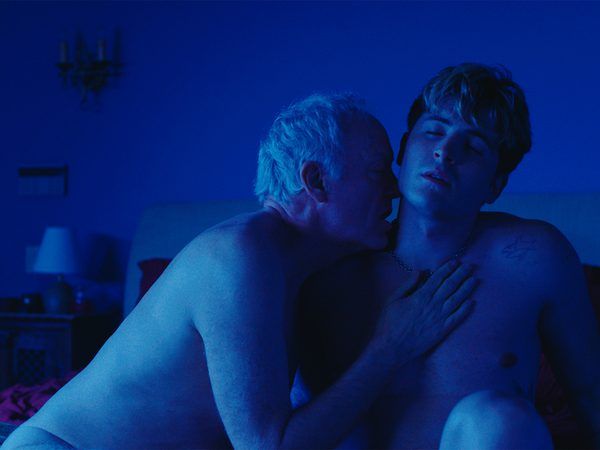
When a routine booking turns into an unflinching confrontation between two men, the boundaries of reality dissolve. This is the visceral core of Elliot Tuttle’s film, Blue Film, a cinematic experience that dares to explore the deepest, darkest corners of human psychology.
The narrative unfolds over a single night, focusing on the intense, ninety-minute conversation between camboy Aaron Eagle, played by newcomer Kieron Moore, and Hank Grant, a former high school teacher from Aaron’s past. What begins as an encounter within a single location quickly escalates into a soul-searching odyssey about identity, trauma, and desire.
Aaron, who views the setting through the lens of sex work, finds himself confronted by a man whose gentle demeanor seems at odds with the stark truths he reveals about his own history. The film masterfully uses this dynamic to examine the complex nature of self-justification. It asks profound questions: What does it mean to be a “pervert”? Are certain traits inherent, or are they created by circumstance?
The film navigates the treacherous waters of child sexual attraction without offering simplistic answers or attempts at moral judgment. Instead, Tuttle treads the line with incredible care, forcing the audience to confront what they believe they understand about these deeply sensitive topics, deepening and complicating our perceptions.
The tension is amplified by the characters’ internal struggles. Aaron attempts to rationalize his life through fabricated narratives of childhood trauma, while Hank grapples with the consequences of his past actions. Their frustration intermingles, highlighting a shared confusion about the definitiveness of their problems, yet they remain unshaken in the knowledge that change is elusive.
The visual language of the film reinforces this mood. The recurring use of blue in the color palette—a nod to the Hays Code’s designation for explicit material—symbolizes the internalized loneliness experienced by both protagonists. This mood is offset by lurid red sheets, drawing the viewer into an atmosphere that is simultaneously moody and intensely sultry.
The performances are deeply nuanced. Kieron Moore delivers a captivating portrayal of Aaron Eagle, oscillating between the cockiness of a shameless operator and the vulnerability of a young man searching for his place. Similarly, Reed Birney brings Hank Grant to life with an unnerving mixture of softness and unsettling charm, making the audience feel both aversion and a strange, uncomfortable empathy.
Ultimately, Blue Film is not a film seeking redemption or justification; it is a cerebral investigation. It refuses to flatten complex realities, allowing the inherent horror of Hank’s actions to remain palpable while simultaneously disarming us with his frank admission. By refusing to offer easy answers, Tuttle crafts a provocative and unforgettable examination of the human condition.
Buy on Amazon
Credit