
Bouchra reviews idiosyncratic furry cinema
The Emotional Geometry of Fur: How Bouchra Blends Identity, Migration, and Motherhood
In an increasingly crowded cinematic landscape, some films cut through the noise not just with visual spectacle, but with profound emotional honesty. Orian Barki and Meriem Bennani’s feature, Bouchra, stands as a stunning example of how independent animation can unlock deeply personal truths, demonstrating that the most compelling stories are often those rooted in the messy, magnificent reality of human experience.
This inventive project utilizes open-source 3D software like Blender not merely as a technical tool, but as a medium for emotional reckoning. It places the act of creation itself at the heart of the narrative, exploring how an artist’s journey to visualize their interior world becomes inseparable from their attempt to heal personal wounds.
At its core, Bouchra dives into the complex landscape of identity and generational conflict. The film follows Bouchra, a Moroccan filmmaker living in New York, as she navigates the emotional distance created by her queerness and the lingering effects of her relationship with her mother. It is a deeply personal exploration of expatriation—the feeling of building a new life while grappling with the fear that home may never offer true acceptance for who one has become.
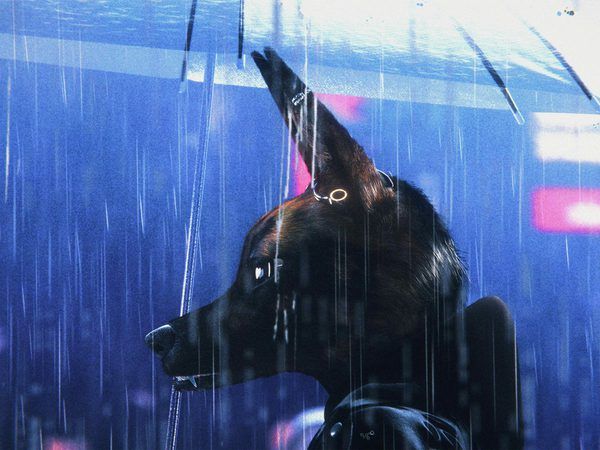
To convey this internal turmoil, the filmmakers chose an abstract yet luminous visual language. The world of Bouchra is populated by anthropomorphic animals: her ex-partner is a cow, her best friend is a lizard, and her new love interest is a bear. This choice of abstraction might initially require adjustment, but it ultimately functions as a powerful artistic device. These richly textured characters exist within the luminous cityscapes of New York City and Casablanca, allowing the film to transcend simple autobiography while maintaining an intimate realism.
The visual style skillfully softens the starkness of the emotional themes. The smallest gestures, awkward pauses, and hesitant phone calls gain a naturalism that allows the film to speak volumes about the difficulty of expressing profound truths—particularly when faced with societal prejudices.
Through these animated forms, the story examines assimilation, the search for belonging, and the pervasive fear of rejection that accompanies living between cultures. The narrative does not simplify or condemn the complex dynamics surrounding Bouchra‘s mother; instead, it meticulously observes the subtle, lingering damage caused by silence and unspoken generational wounds.
Bouchra is more than an animated feature; it is a testament to the power of visual storytelling, proving that even when dealing with monumental issues like sexuality and migration, art can provide a necessary space for emotional healing and unforgettable connection.
Buy on Amazon
Credit