Communion’s strange visuals and the story behind it
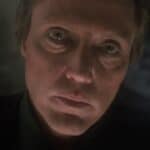
Alien movies are plentiful—from blockbuster science fiction to straight-up horror and the endless stream of cult cinema designed purely for profit. But sometimes, amidst the noise, one film emerges as a true anomaly: a movie defined not by spectacle, but by sheer, peculiar strangeness. Enter Communion, the 1989 film starring Christopher Walken, which stands as a fascinating, bizarre footnote in pop culture history.
Communion wasn’t a mainstream hit, but it carved out a unique, enduring niche in cult movie lore. It is built upon the experiences of author Whitley Strieber, who chronicled his purported encounters with non-human entities in his 1987 book, Communion: A True Story. This foundation immediately gave the film a layer of intriguing, unverified mystery, setting it apart from typical science fiction fare.
The book itself became a bestseller, providing the framework for the film. Strieber presented his accounts as nonfiction, detailing his alleged abduction on December 26, 1985, and introduced the concept of “the Visitors”—a neutral term he used to describe the beings without committing to a single explanation.
This concept was visually cemented by Ted Seth Jacobs’ illustration, which provided one of the most recognizable images in UFO culture, directly feeding into the pop culture fascination with the “Grey alien.” The book and subsequent cultural references, ranging from The X-Files to progressive metal bands like Evergrey, demonstrate how the story of Communion seeped into the collective imagination.
The film itself was an independent production, made by Strieber, who sought to keep the narrative deeply personal rather than leaning into conventional alien abduction horror. He famously avoided major studio interference, choosing instead to craft a character study based on his own claimed experiences.
For the casting, Christopher Walken brought an unforgettable presence. Though he had already amassed a stellar filmography, his performance in Communion felt uniquely tailored to the film’s surreal atmosphere. Despite Strieber’s later reservations about Walken portraying the protagonist as too eccentric, the actor delivered a performance that remains magnetic.
The production behind the film was equally unconventional. Strieber enlisted Australian filmmaker Philippe Mora, who brought a diverse cinematic sensibility, and the behind-the-scenes process was steeped in oddities, including a cameraman using a time-lapse camera for exterior shots and an assistant director who was reportedly deaf.
The film’s visual and auditory elements, like the opening score provided by Eric Clapton, combined with the narrative ambiguity, created a truly strange experience. While some found the special effects underwhelming, the film’s true impact lies in its willingness to leave the viewer suspended between belief and doubt.
The film’s most compelling moments emerge when the narrative leans into the psychological horror. The sequence where Strieber confronts the Visitors, and the bizarre, almost dreamlike interactions involving Walken and the otherworldly beings, are where the film truly transforms into something genuinely unsettling.
Ultimately, Communion defies easy categorization. It is not simply a piece of cheap sci-fi horror; it is a strange piece of cinematic history—a peculiar intersection of purported nonfiction, acting genius, and cinematic oddity. It challenges viewers to decide whether the reality of the experience lies in the special effects or the unsettling human psychology on display.
Buy on Amazon
Credit
