Cotton Queen: Reclaiming the crown for Sudanese girls review
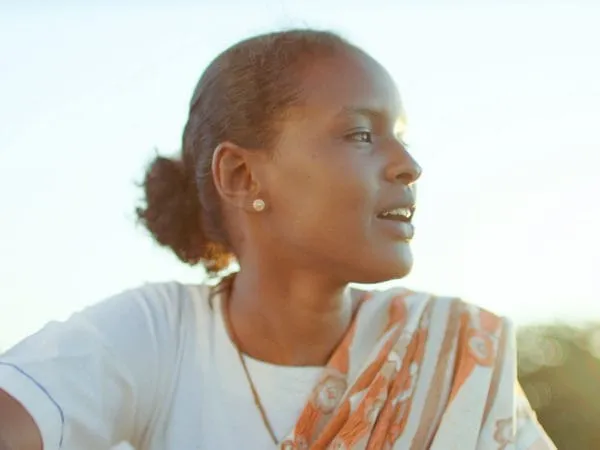
Suzannah Mirghani’s film <Cotton Queen> is not merely a story about cotton; it is a tender, deeply resonant coming-of-age narrative spun from the heart of Sudan, seeking to reclaim a history often overshadowed by tragedy.
For generations of Sudanese women, cotton was more than a commodity; it was a source of personal economic power. Grandmothers spun raw fibers into thread, granting women a degree of independence that was fiercely valuable. Yet, these very fibers carried a heavy inheritance, having been one of Sudan’s great colonial commodities, grown primarily to enrich others. In Mirghani’s cinematic vision, these threads come laden with a significant amount of historical baggage.
The film follows the immediate, pressing concerns of teenage Nafisa (Mihad Murtada). Her world is defined by immediate desires—her love for Babiker (Talaat Farid) and her wish to marry him. These personal aspirations clash directly with the formidable authority of her grandmother, Al-Sit (Rabha Mohamed Mahmoud), who has already arranged her future with Nadir (Hassan Kassala), a young Sudanese man raised in Britain.
This tension is amplified by a modern economic threat. Nadir arrives with a proposal far more disruptive than tradition alone: genetically modified cotton seeds. These seeds promise massive yields but threaten to supplant the traditional crop growing in the surrounding fields, challenging the established order and the matriarchal control over resources.
While it would be easy to position Al-Sit as the dusty totem of tradition, the film resists such simplicity. The matriarch is complex, adored, and burdened by a history that has swelled into mythology, often existing in uneasy contrast with the economic independence that cotton once afforded women. The arrival of GM cotton, introduced to Sudan in 2012, and its subsequent dominance by 2020, represents a powerful shift—a trajectory that has successfully escaped the control of the traditional power structures.
Filmmaker Suzannah Mirghani approaches this intricate landscape with the intimacy of home and the perspective of distance. Raised in Khartoum and now based in Qatar, she uses the film to explore the intersection of these shifting dynamics. The title itself references the Cotton Queen beauty contests, a British flourish exported to colonial Sudan where young women became the smiling faces of the industry. Mirghani reclaims this crown for a Sudanese girl who is considerably less interested in being decorative.
The emotional landscape of the film is deeply layered. Mirghani intended to shoot in Sudan before conflict forced production to Egypt, where displaced Sudanese cast and crew rebuilt a version of home beside the Nile. Watching as a Sudanese woman in 2026, the familiar landscapes of life—the familiar songs, the particular family dynamics—can suddenly feel devastating. Homes have been emptied, communities scattered, and lives destroyed by war.
Yet, <Cotton Queen> wisely avoids presenting Sudan as a country passively awaiting tragedy. Instead, it captures the vibrant, often messy reality of human response. Nafisa embodies a glorious teenage conviction of terminal uniqueness, sensing that no one in history has been as inconvenienced as she. In the midst of living life, Mirghani grants her a space to imagine a future when so many Sudanese people are currently fighting to once again have their freedom. The film offers not just a look at the land, but a celebration of the enduring human spirit.
Buy on Amazon
Credit