Dead Screen Mirror Trans Gaze Metacinema
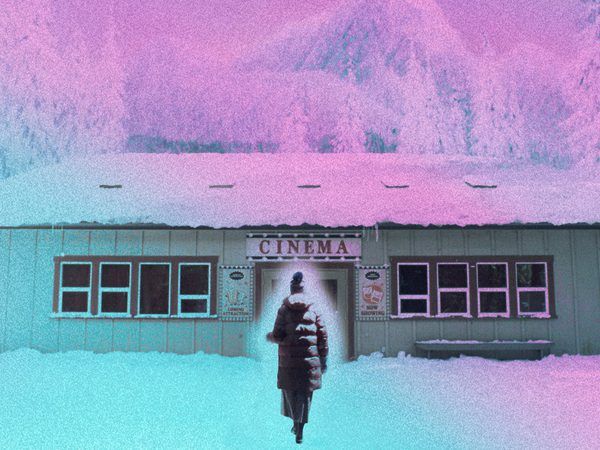
There is a fascinating new current emerging in cinema, driven by filmmakers who are turning the camera not just onto the story, but onto the act of watching itself. Through films about films and characters in the act of viewing, a new wave of trans filmmakers is transforming a medium that has long distorted their image into one that finally reflects their own lived reality.
This cinematic movement goes beyond simple metacinema. While traditional metacinema makes us aware that we are watching a movie, the work of the Trans New Wave plunges viewers into the complex history of trans representation. It requires us to acknowledge the historical context of how transness has been framed in cinema, pushing against our sense of disbelief.
This need for self-awareness stems from the particular position contemporary trans practitioners occupy: navigating hyper-visibility, engaging in constant self-surveillance, and striving to correct established media narratives. These films understand that representation is not a neutral act; it is a constant renegotiation of identity in a world where an image can quickly become an argument about what transness is supposed to be.
For trans women, this scrutiny often leads to a form of self-checking where what feels comfortable in public presentation becomes entangled with what others find comfortable about trans existence. This internal friction is the fertile ground from which the Trans New Wave’s particular style of metacinema emerges.
Consider the use of meta-commentary in works like Funny Games, where a subtle wink from Arno Frisch hints at the self-conscious nature of the gaze. But as we look at more recent entries, such as Vera Drew’s The People’s Joker, Alice Maio Mackay’s T Blockers, and Jane Schoenbrun’s Teenage Sex and Death at Camp Miasma, the focus shifts entirely to the machinery of representation. The camera turns back on itself, reflecting the experience of being watched, interpreted, and misinterpreted.
In Teenage Sex and Death at Camp Miasma, director Kris (Hannah Einbinder) is tasked with revitalizing the problematic Camp Miasma franchise, spending time at an abandoned summer camp inhabited by the first ‘final girl,’ Gillian Anderson’s Billy Preston. The film’s construction is inseparable from its plot, revolving around the making of a queer film while simultaneously examining the act of watching it. This experience mirrors the challenges faced by trans cinema: representation is the very condition under which it is produced.
The irony becomes particularly sharp when we see the filmmaker caught in this loop. Kris is attempting to correct a hundred years of misrepresentation while imagining how a queer audience will engage with the resulting media. This creates a circular logic where the filmmaker and the audience occupy the same space: making a queer film while imagining the queer gaze that will watch it.
This process is echoed in other works. In T Blockers, two trans girls confront parasites and take action, and a fictional lost film, Terror from Below, is quoted in the opening narration, reminding the viewer they are watching fiction. Similarly, in Schoenbrun’s I Saw The TV Glow, the fictional series The Pink Opaque feels more real than real life for the characters who obsess over it, serving as their vessel for queer recognition.
The film The People’s Joker takes this further by placing a trans woman in the role of the villain, The Joker, taking ownership of the text. This cycle—making films about ourselves, watching ourselves in them, and then making films about the act of watching ourselves—is the heart of the Trans New Wave. These meta-techniques are not just stylistic flourishes; they are powerful attempts to interrupt the everyday gaze trans people face, turning it back on itself.
For younger queer audiences, this shift changes the landscape. Media no longer requires this intense act of excavation to confirm queerness; the habits of scrutiny and correction have become embedded in how we engage with media. The Trans New Wave allows us to observe and correct the very habits of representation, creating a space where the speculation and scrutiny inherent in queer media consumption are fully embraced.
Buy on Amazon
Credit