Design Review: The Seat of Learning
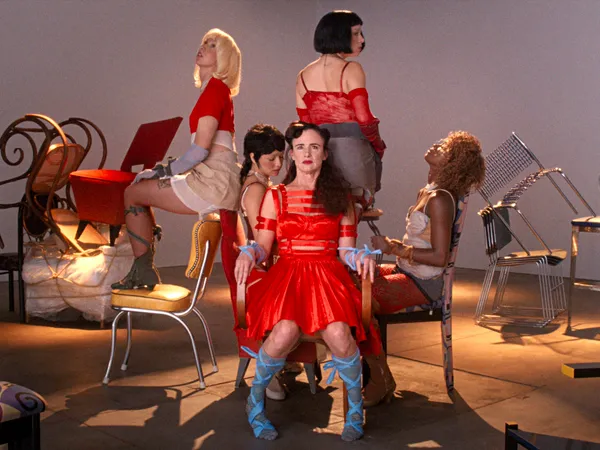
What happens when the boundaries between the animate and the inanimate blur? American filmmaker Amanda Kramer dives headfirst into this fascinating territory with a concept that is both utterly absurd and deeply human: a body-swap movie involving a person and a piece of furniture.
At the heart of the story is Camille, played by Juliette Lewis. She seems to navigate the world with a certain polished detachment, engaging in polite alienation during her routine social interactions. But this carefully constructed presence crumbles when she encounters a simple, beautiful wooden chair in a furniture showroom. Unable to afford the object, Camille is faced with an impossible choice: she must become it.
In a stroke of cinematic surrealism, her consciousness abandons her human form and is transferred into the chair. This act is not just a physical change; it is a profound philosophical inquiry into identity. The chair, initially just an object, becomes a vessel, granting Camille a strange form of agency within the very position of objecthood she might otherwise be expected to escape as a woman.
Kramer uses this transformation to explore the tension between being seen and being known. If being seen means being known, and being known means being loved, what happens when the subject of that perception is reduced to an inanimate form? The film brilliantly scrambles the rigid distinction between the living and the inert, asking whether true freedom lies in pure unknowability.
The exploration deepens when the film engages with the concept of object-oriented ontology—the idea that things, by their very existence, exceed our access to them. The chair, stripped of its projected meanings as mere furniture, becomes a potent symbol. It is simultaneously a possession, an artwork, a status object, and a companion, forcing the audience to reconsider how we assign meaning to the world around us.
Juliette Lewis delivers a masterclass in embodiment, asking her audience to inhabit a state of complete inertia. Her performance is reduced to the barest flicker of expression, emphasizing an attention to presence that connects the physicality of the body to the concept of performance. This focus bridges Kramer’s earlier work with the idea that identity is inseparable from how we present ourselves.
Ultimately, Camille’s drive toward the chair reveals a deep, human longing. It suggests that the impulse to become the object of one’s own envy might be a desperate attempt to escape the inadequacies of the self. The film suggests that the desire to be beautiful enough that looking might finally constitute a form of love is both its melancholy truth and its wry, unsettling joke.
Buy on Amazon
Credit
