Desperate Salesmen Behind the Cinema Window
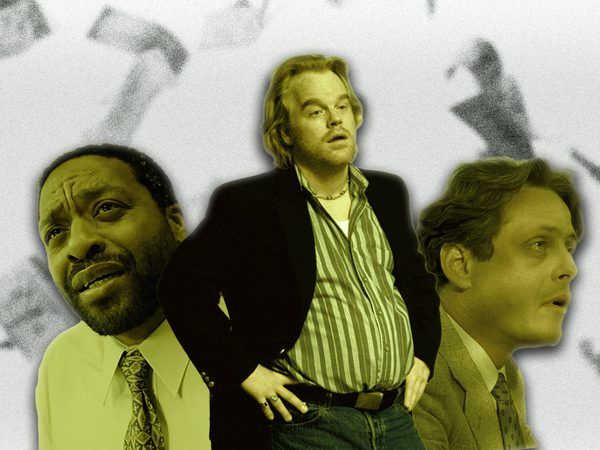
In the world of cinema, we often romanticize the swagger of the successful salesman—the smooth-talking charlatan who makes risk look cool. But peel back the layers of these archetypes and you find something far less polished. The reality of many businessmen is not a triumphant hustle, but an artifice that feels as hollow as their storefront displays.
Consider Cap’n Clark in Backrooms. His imagined Ottoman Empire store is plastered with signs screaming “RIP OFF”, and generic sales slogans mock the reality of his existence. Drowning his sorrows in the showroom, Clark embodies failure, an extension of the coldness of the space itself. When confronted by therapy that suggests loneliness, he rejects the idea, finding solace only in the presence of customers and employees. His frustration boils over: “I am a fucking architect, I’m just stuck selling shit furniture…” This stark performance reveals that for many, the persona is less about success and more about masking profound unfulfillment.
This exploration delves deeper into the brick-and-mortar salesman archetype. Unlike the slick hustlers of films like The Wolf of Wall Street or Glengarry Glen Ross, who teach us about depravity and high-stakes negotiation, these figures are often more lost than sleazy. Their mediocrity is encapsulated in selling home goods—tubs, beds, and furniture—a seemingly tame engagement that allows them to avoid the true complexity of real connection.
In Desperately Seeking Susan, for example, the dynamic between housewife Roberta and her tub salesman husband Gary showcases a pastel, saccharine view of luxury devoid of depth. While commercials poke fun at Gary’s role—featuring goofy, commercialized poses—Roberta seeks something more vivid and textured. Their attempt to build an ivory tower is undermined by dissatisfaction, highlighting how transactional relationships can perpetuate bland existence.
The facade crumbles further when we look at the men who cannot rely on charm or intellect to mask their insecurities. Paul Thomas Anderson’s Punch-Drunk Love introduces Dean Trumbell, the Mattress Man, whose showroom hides a clandestine side business. His hostility toward those around him is a shield; he cannot handle simple interactions without complaint, revealing a deep-seated insecurity masked by control.
This internal struggle mirrors that of entrepreneurs like Barry in Punch-Drunk Love, who experiences a crisis of masculinity—loneliness and rage—while navigating his ambitions. Unlike the hyper-confident figures in other films, Barry is made sympathetic through vulnerability, finding grounding not in aggressive persona-building but in genuine affection for Lena.
Even when gender roles are reversed, as seen in Licorice Pizza, the instability remains. Alana attempts to navigate a new life with Gary, finding fleeting excitement in their shared ventures. Yet, even during moments of high energy, such as the awkward grand opening of the waterbed store, there is an air of pitiful instability. The pursuit of external validation through business ownership does not deliver true fulfillment.
Ultimately, the brick-and-mortar space has flatlined in contemporary culture. As online purchasing dominates, these physical locales often cease to exist, leaving behind empty parking lots and showrooms. These businesses function less as manifestations of dreams and more as idle engagements that keep characters at a safe distance from genuine connection. The lesson remains: if the salesmen refuse to evolve beyond their judgment and rudeness, they risk remaining exactly as unwanted as their inventory.
Buy on Amazon
Credit
