
End of Oak Street: A toothless Spielberg pastiche review
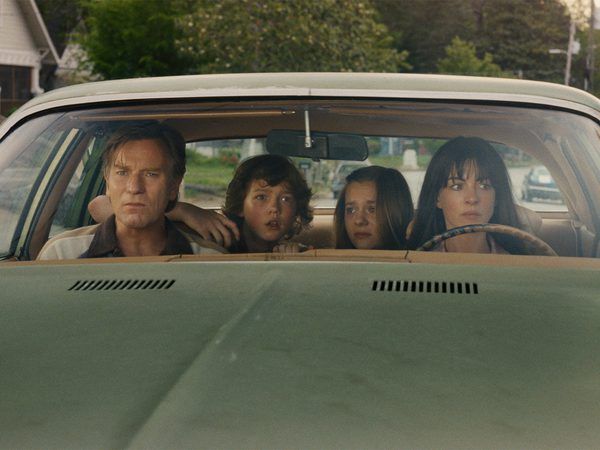
Suburbia is a carefully constructed illusion, isn’t it? David Robert Mitchell’s new genre-bending family drama The End of Oak Street throws a bizarre, prehistoric twist onto this idyllic setting, suggesting that the true danger to the American Dream isn’t giant reptiles, but the cracks forming within the community itself.
The film opens on the familiar promise of an American neighborhood—an Oak Street, like any other, steeped in the wholesome nostalgia of 1982 suburbia. We see a family seemingly enjoying the golden age of prosperity, participating in simple pleasures like barbecues and games. Yet, beneath the sunlit surface of picket fences and leafy cul-de-sacs, deep fissures are already visible. Greg Platt and his wife Denise attempt to maintain a facade of perfect harmony, but their relationship is riddled with unspoken secrets and endless bickering.
The pressure cooker environment intensifies when their children, Audrey and Brian, openly speculate about the impending specter of divorce. Financial strain further exacerbates the tension; Audrey struggles to afford the expected opportunities, while Brian faces the threat of local bullying, embodied by a vicious bully who circles like a raptor in the neighborhood.
This domestic turmoil is overlaid with an existential dread that quickly morphs into something far more surreal. As the family navigates their personal crises, strange lights begin to intrude upon their sense of normalcy. The narrative cleverly draws parallels between these unsettling suburban events and classic cinematic anxieties—echoes of Close Encounters of the Third Kind and E.T. the Extra-Terrestrial—suggesting that the fear of the unknown is a recurring theme in human experience.
The physical threat escalates dramatically when Oak Street is suddenly transported across millions of years, thrusting the family into an ancient world where survival hinges on primal struggle. This shift serves as a powerful metaphor: the internal conflicts of the Platts—their running and fighting—are simply a relitigation of their pre-existing tensions in a larger court of Darwinian survival.
Mitchell weaves together the personal drama with weighty political commentary, examining how modern America faces forces that threaten its foundation. The film posits that the solution to surviving our current predicament lies not in isolating ourselves but in recommitting to community and mutual support. In a world grappling with antediluvian ideologies and predatorily atavistic forces, Mitchell’s ultimate message is stark: look out for one another.
The story ultimately asks us to redefine what it means to be a cohesive society, suggesting that the bonds of neighborliness—what many call community—are the only defense against societal collapse. In the face of these enormous existential and political pressures, the film delivers an unforgettable reminder that the greatest challenge is not external chaos, but choosing solidarity over division.
Buy on Amazon
Credit