Evil Dead Burn struggles to stay alight review
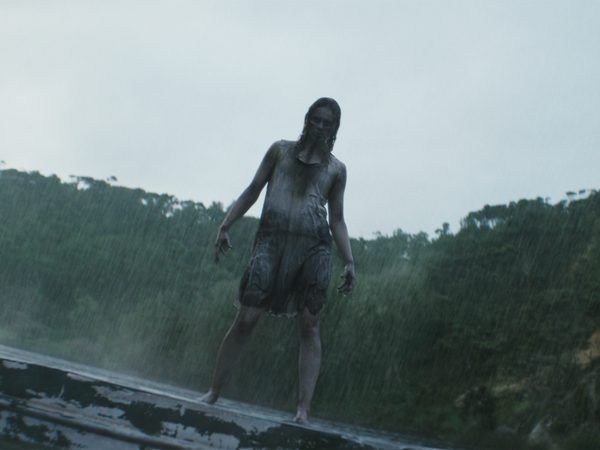
An unfortunate family reunion turns into a bloodbath in Sébastien Vaniček’s latest addition to the Evil Dead franchise.
Following Sam Raimi’s visceral reanimation in Evil Dead Rise, fans were promised a trilogy of demonic mayhem. Enter director Sébastien Vaniček, tasked with sustaining this hellish crescendo. He brings together a dysfunctional family—Alice (Souheila Yacoub), her grieving brother Joseph (Hunter Doohan), girlfriend Thya (Luciane Buchanan), parents Susan (Tandi Wright) and Edgar (Erroll Shand), and grandma Polly (Maude Davey)—to mourn Will’s unexpected death. Little do they realize that the Deadites are on their way, poised to transform this grim affair into a true nightmare.
The Evil Dead universe has never been concerned with realism, but even before the reanimation, the Price family felt more like caricatures. The film attempts to build character but often falls short, exemplified by Polly, the grandmother suffering from severe dementia, who is played solely for cheap laughs. Furthermore, the mother-in-law Susan’s decision to feed the family instant mashed potato on paper plates after her favorite son’s funeral seems delightfully inconceivable.
While the prerequisite bloodshed certainly masks shoddy character building, the narrative pace often feels exhausting. Each installment in the franchise has insisted on a central trauma that damages the family almost as much as the demons possessing them, slowing down what should be a relentless flow of action. In this instance, Evil Dead Burn attempts to explore not just demonic possession but generational cycles of abuse, focusing on two beaten women, Alice and Susan. This approach feels insincere when walking-talking corpses are mutilating themselves for kicks.
The film introduces the first actual Deadite hag, giving Polly a gruesome role. However, this development doesn’t quite match the spectacular gore achieved elsewhere in the franchise, such as Final Destination Bloodlines breaking records with its stunts. Instead of escalating the visceral horror, it adds another hag movie to an already mounting pile driven by male horror directors.
Ultimately, the biggest disappointment lay in the failure to see Vaniček’s unique vision shine through. Instead of forging a gruesome path unique to the director, the film settles for a dull cohesion—reusing camera angles and lore-based easter eggs across the films. If Evil Dead Burn had committed fully to its gore without relying on explicit metaphors about domestic violence, it might have lived up to its potential. Instead, Alice’s suffering culminates in a final face-off with a Deadite that resembles a charred silver surfer, leaving audiences with more embers than brimstone.
Buy on Amazon
Credit: Little White Lies