First look at the company review
The Nested Dolls of Loneliness: Unpacking Casey Affleck’s Company
Casey Affleck’s Company is a film that feels less like a cohesive narrative and more like a beautifully constructed, slightly bewildering maze. It attempts to weave an intricate tapestry of interconnected lives, prompting viewers to ask if the complexity is a deliberate artistic choice or simply a labyrinth of loose threads. While the premise is undeniably intriguing, the execution often feels labored, making the viewer wrestle with the film’s sprawling scope.
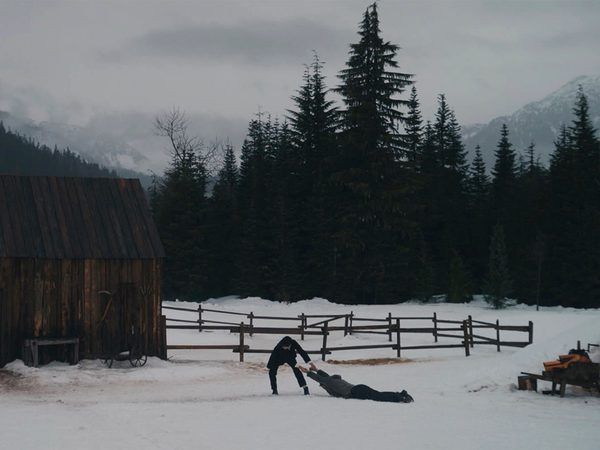
The film opens with a peculiar setup: Evelyn, holding a mysterious, wordless note on Christmas Day, initiates a chain reaction. This seemingly simple act of receiving an anonymous message sets the stage for an astonishing nested structure. Evelyn’s story introduces the aging hermit Joe, who, in turn, welcomes a mysterious visitor, Alice, who recounts tales of gruesome murders involving a stoic farmer, his wife, and another mysterious figure. This chain unwinds into a multi-generational narrative, effectively acting like a Matryoshka doll, where each story contains the next, demanding patience from the audience to trace the connections.
Affleck attempts to manage this sprawling ensemble by repeatedly focusing on the theme of togetherness and isolation. Through the interactions between the characters, the film seeks to explore the isolating nature of loneliness. Alice’s invitation for company to Joe, Caleb’s somber response to Rebecca, and the various encounters across the narrative all cycle back to the central idea of shared presence, trying to illuminate the deep emotional stakes of human connection.
However, as the narrative deepens into its convoluted structure, the initial curiosity begins to give way to frustration. The film’s ambitious complexity often results in a zigzagging storyline that can feel less cohesive than carefully constructed. The attempt to use these interlocking parables to create dissonance and lead toward a predictable twist sometimes overshadows the genuine emotional depth the film strives for.
Beyond the narrative architecture, the film’s visual and auditory presentation occasionally struggles to support its lofty ambitions. The audience is asked to suspend disbelief when characters with cosmetically enhanced features navigate the cadence of old accents, and the visual design sometimes feels closer to a community theatre production than a high-budget historical drama. Shoddy costume and production design only further weaken the illusion of a richly textured world.
Even the dialogue can be challenging; when delivered by actors like Atticus Affleck, the frequent, lengthy exposition can feel overexposed rather than immersive. This is where the film feels most dissonant—it creates the sense of profound emotional weight while simultaneously struggling to deliver the refined tenderness that defines truly successful character drama.
Yet, there are moments that shine through this intricate structure. Just fifteen minutes before the credits roll, the film allows for precious, unscripted moments of genuine inspiration. A simple kiss between two lovers, amidst all the complicated threads, becomes a powerful, heartfelt statement. It is ironic that a film built on the premise of inviting the audience into its guarded world ultimately works to shut us out, but these final, raw emotional beats prove that the human need for connection remains powerfully resonant.
Buy on Amazon
Credit