First Look London Review
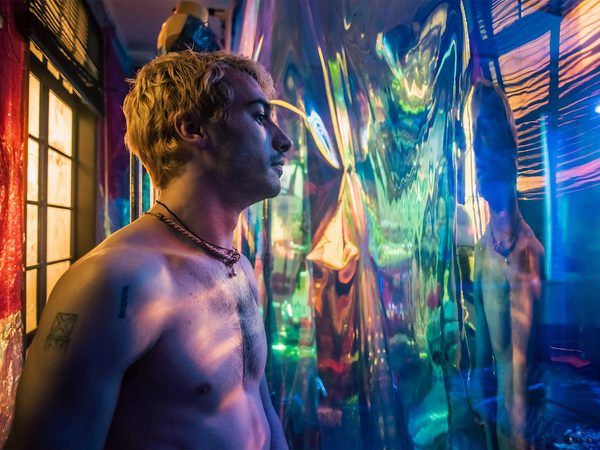
In the world of cinema, some films don’t just tell a story; they pose a profound set of questions. Victor di Marco and Márcio Picoli’s work, particularly their film London, dives headfirst into these complex inquiries, using the intimate landscape of a sex dungeon to explore themes of identity, freedom, and the often-unspoken realities of disability.
The film begins by establishing a stunning contrast: the duality of night and day. London, the protagonist, is positioned as a man of the night, a figure who navigates the world as a self-described “question mark limping happily through the streets.” Yet, the film suggests that true clarity—the great dilemmas of existence—are only revealed in the light of day, challenging the conventional notion that daylight denies certain truths to those who live in the shadows.
This tension permeates the narrative, pushing the viewer beyond the sensory overload of the dungeon and into a deeper reflection on London’s personal struggle. While the environment of the sex establishment represents an aphrodisiac freedom found in anonymity, the central conflict shifts dramatically when London faces a very different kind of uncertainty: the quest for a medical diagnosis.
The film masterfully exploits this dichotomy, turning the clinical and the erotic into a shared visual language. The sterile reality of the medical process is juxtaposed against the raw experience of the playroom, forcing a confrontation with how society views and categorizes bodies. The pursuit of a physical truth—the diagnosis—stands in stark contrast to the emotional liberation achieved through the ephemeral freedom of the dungeon.
Through these stark contrasts, the filmmakers find moments of unexpected and powerful inspiration. A clinical setting, such as an MRI machine, transforms from a space of potential torture into a focal point for intense emotion. Similarly, the textures of the film reflect the theme of the body: the stark red of the MRI lights mirrors the red plastic wrap covering London’s brace, turning a necessary medical aid into a symbol of desire and self-expression. This visual metaphor is amplified when London encounters an outdoor Zumba class, finding solace and movement alongside older women, powerfully illustrating the link between disabled bodies and the accessibility requirements of aging bodies.
The narrative then expands, spreading its focus to explore these intersectional themes with a hunger that reflects the spirit of young filmmaking. Instead of strictly fine-tuning the initial questions, the story introduces a procession of side plots, touching on the realities of family life and travel. While some sequences leaned heavily on exposition, the film’s true strength lies in its refusal to dilute the nuance of these conversations. Di Marco and Picoli achieve this depth not through excessive dialogue, but through a masterful sense of style.
The film’s aesthetic is equally compelling. The visual composition is punctuated by a visceral soundscape that cuts through the narrative. Intimate moments are accompanied by the sharp, guttural sounds of human connection, while the sense of public exposure is underscored by the screeching of horns, acting as an auditory warning. This use of sound, favoring the potency of human and mechanical noise, elevates the film from a mere reflection into a truly memorable and striking artistic offering.
Buy on Amazon
Credit
