
Fly at Forty Reckoning with the Flesh
Self-optimisation technologies, whether in AI or biohacking, only ever expose how deeply our sense of self is tethered to the physical body. This stark reality is powerfully reflected in the work of Canadian auteur David Cronenberg, whose materialist philosophy serves as a timely and disturbing reminder that the human form is inherently transient.
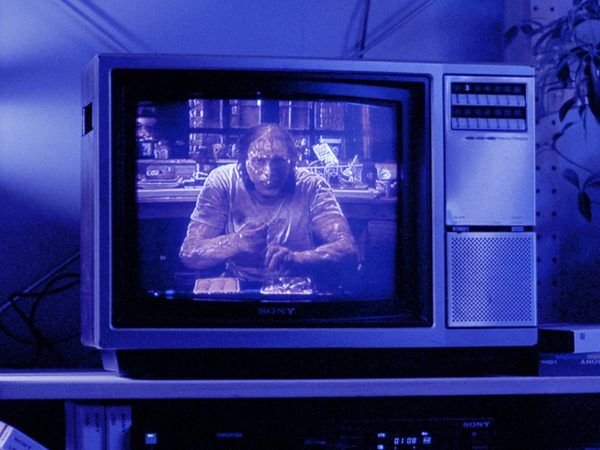
Cronenberg’s most commercially successful film remains one of cinema’s most potent explorations of this theme: The Fly. Released in 1986, the film is infamous for its visceral body horror—fingernails ripped from decaying flesh and digestive juices oozing onto a doughnut—but it is far more than mere spectacle. It functions as a profound allegory about the fear of bodily breakdown and estrangement, especially resonant amid the anxieties of the AIDS crisis.
The narrative centers on the scientist Seth Brundle (Jeff Goldblum), who attempts to master the ultimate transcendence through a teleportation machine. Initially, the experiment focuses on inanimate objects, but when the machine fails to “deal with the flesh,” Brundle’s quest spirals into agonizing metamorphosis. The film unflinchingly depicts the body’s sheer ungovernability as it succumbs to Brundle’s frantic will to stay human.
This grotesque transformation culminates in the creation of the Brundlefly, a man-insect hybrid, emphasizing how violently the physical form resists attempts at perfection or transcendence. The film asks us to confront the uncomfortable truth that our bodies, though seemingly solid, are fundamentally alien and unruly.
The body horror in <The Fly> is potent because it forces an encounter with the flesh itself. Veronica’s nightmare of giving birth to a writhing maggot-baby locates the fear of threatened bodily autonomy in stark, gendered terms. While Brundle fears the body he no longer recognizes, Veronica fears a form capable of producing life beyond her control—a viscerality that captures the fraught relationship with our physical existence.
Yet, merely recognizing the flesh does not liberate us from systems that seek to exploit it. Today, this alienation is repackaged by the wellness industry and the self-optimization economy. Through meditation apps, corporate retreats, and wearable technology, we are encouraged to function more efficiently under capitalism rather than question its exploitative logic. The quest for self-improvement often masks a profound disconnect from our corporeality.
Similarly, entertainment has evolved to turn shock and disgust into momentary catharsis. Spectacles like The Substance—which explores the violence women inflict upon their bodies to remain desirable—and Crimes of the Future—where surgery is performed for an audience starved of real sensation—suggest a deeper need than fleeting gratification. Cronenberg suggests that when our capacity to feel becomes disembodied, feeling itself can only be simulated.
Despite this overwhelming technological push toward optimization, <The Fly> offers a paradoxical kind of answer. Brundle’s failure in trying to transcend the limitations of the flesh ultimately proves there is no self waiting beyond it. As Cronenberg himself observed, “The further from your own body you get, the less real everything is… the less you connect with it.”
The film remains profoundly affecting because it compels us to face this truth: accepting our mortality is not defeat, but a path toward meaning. In an age obsessed with longevity and technological perfection, the visceral reality of <The Fly> reminds us that the fragility of the flesh is precisely what makes life meaningful.
Buy on Amazon
Credit