Gold in the Hills The Weight review
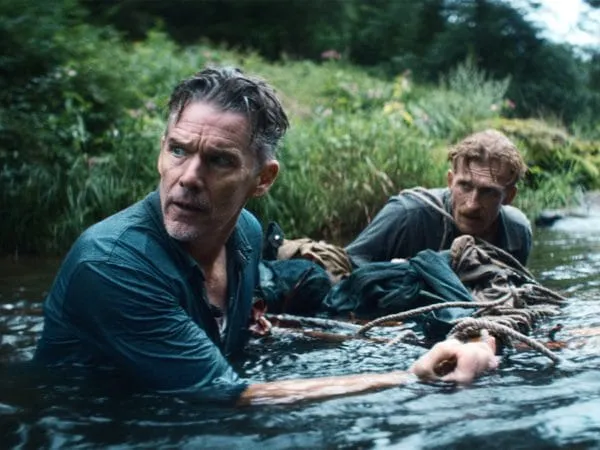
Ethan Hawke proves that sticking to a tight formula can still deliver an exhilarating adventure. This is the story of a likable trail western-cum-gold heist that masterfully blends rugged frontier life with high-stakes action.
The premise sets the stage for a wild ride, centered around a group of convicts coerced into assisting with a daring gold retrieval during the Great Depression. At the heart of this adventure is Murphy, played brilliantly by Ethan Hawke. Murphy is a clean-cut figure thrust into chaos when he accidentally clobbers a gang of undercover cops while trying to protect his young daughter. Faced with the harsh realities of his situation, Murphy chooses to keep his head down, hoping to secure early parole and freedom for his little one.
Fate intervenes when harsh-but-fair chain gang overseer Clancy (Russel Crowe) notices that Murphy possesses more than the average of the reprobates. A deal is offered: help him retrieve a cache of gold before it falls into the hands of jackal FDR and his government associates. The mission is set, and Murphy must rally three helpers to embark on a six-day trek across the unforgiving Oregon wilderness.
What elevates this setup beyond a simple chase is the ingenious way the narrative handles survival and practical engineering. Murphy isn’t just a reluctant participant; he is a master of improvisation, applying the laws of physics to the laws of survival. With an innate knack for fixing things, Hawke’s character embodies a mean-eyed, MacGyver-type fixer. He skillfully engineers solutions, fixing the engine of Clancy’s duffed-up Ford 18 and ensuring his crew can safely navigate rocky terrain, swelling rivers, and a rickety rope bridge.
This fusion of frontier narrative and practical problem-solving gives the film a distinct, tangible feel. It operates like a loving homage to the classic trail westerns, grounded in the grit and ingenuity of its characters.
However, while the foundational story is strong, the execution occasionally falters. Some moments of high tension dissipate before they reach their natural peak, and the pacing sometimes rushes through set-pieces, such as the dramatic rope bridge crossing, potentially sacrificing the necessary runtime for true tension.
Furthermore, the visual style presents some stylistic inconsistencies. Cinematographer Matteo Cocco employs a strange, soft-edge fisheye look that feels anachronistic to the time period of the story. Similarly, a climactic car chase lacks the necessary scale, failing to give the audience the full sense of the action unfolding.
Despite these technical quibbles, the film remains a compelling experience. It is a solid piece of filmmaking that reminds us that simple, well-executed concepts—marrying rugged adventure with clever survival tactics—can still shine brightly on screen. It’s a testament to the fun found in sticking to a clear, engaging formula.
Buy on Amazon
Credit