Halloween Cut Battle Theatrical vs Producer
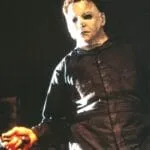
The legacy of the classic horror franchise often involves more than just gore and jump scares; it involves endless re-evaluations and diverging timelines. Nowhere is this more apparent than in the history of Halloween 6, which exists in two fundamentally different versions: the theatrical cut and the acclaimed Producer’s Cut.
The path to these two versions was anything but smooth. Following the reception of Halloween 5, production stalled, leading to a creative scramble. A superfan, Daniel Farrands, brought an extensive mythology—a veritable Halloween bible—to the table, aiming to reshape the narrative. This ambition led to complex legal battles and studio shifts, resulting in a cinematic outcome that allowed for multiple interpretations of what Michael Myers and his world truly meant.
The original theatrical cut arrived in 1995, offering a brisk, hyperviolent sprint. It focused squarely on Michael Myers as the unstoppable killing machine, providing quick action and minimal time for character development. While fun, this version prioritized the slasher elements, moving quickly toward the inevitable final confrontation.
In contrast, the Producer’s Cut offers a deeply expanded experience. It delves into the lingering questions left by previous films, allowing the characters more room to breathe and explore the deeper mythology of the Thorn cult. This version is significantly longer, weaving in extended scenes and conversations that flesh out the story, grounding the horror in a richer sense of consequence.
The differences are stark. The theatrical version treats Jamie Lloyd as a victim of brutal violence, serving primarily as a plot device. The Producer’s Cut, however, treats Jamie as a complex character, allowing for emotional responses and a far more nuanced fate. This shift changes the entire emotional landscape of the film.
Even the atmosphere changes. The musical score shifts dramatically, moving away from the original tone toward a more aggressive, drum-and-guitar-heavy sound. Furthermore, the opening sequences diverge, with the theatrical cut offering a quick recap, while the Producer’s Cut uses extended narration to establish the history of the Man in Black and the looming threat of the cult.
Perhaps the most profound divergence lies in the ending. The theatrical cut delivers a fast, brutal conclusion, focusing on Michael’s dominance. The Producer’s Cut, however, introduces a far more explicit continuation of the cult storyline, suggesting that the evil has been passed, leaving Loomis entangled in the Halloween mythology. It provides a narrative resolution that appeals to those interested in the deeper lore.
Ultimately, whether you choose the theatrical cut or the Producer’s Cut depends entirely on what you seek from the franchise. If you crave a visceral, high-octane return to classic slasher intensity, the theatrical version delivers. If you prefer a gothic exploration of character arcs, complex lore, and a more explicit continuation of the supernatural saga, the Producer’s Cut offers a richer, more satisfying journey.
Buy on Amazon
Credit
