Ink first look visual review
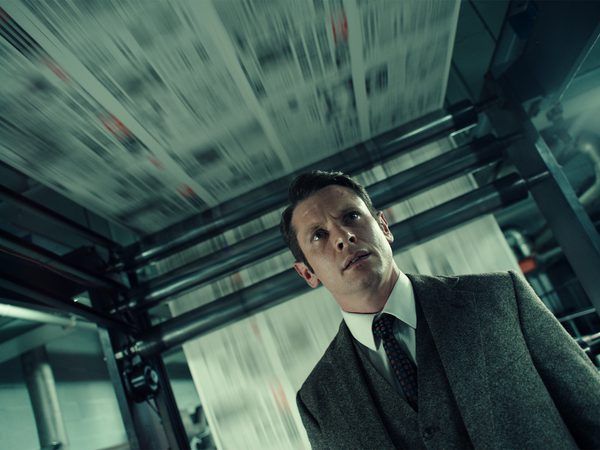
When looking at the dramatic trajectory of media titans, the quest for power, and the murky waters of press morality, Danny Boyle’s film <Ink> attempts a monumental journey. Yet, while the film delivers a visual spectacle, it ultimately struggles to spin the compelling narrative it sets out to tell about the rise of Rupert Murdoch and the colossal influence of The Sun.
The film throws us into 1969, a moment charged with cultural upheaval—the echo of Woodstock, the nascent digital age, and the dawn of the internet. Against this backdrop, the narrative centers on a seemingly straightforward deal struck between media heavyweights. We witness Rupert Murdoch and his associates navigate the complex landscape of publishing, their pursuit of dominance mirroring a world caught between historical consequence and explosive ambition.
The film’s visual identity mirrors this internal conflict. Boyle employs an aggressive, kinetic aesthetic: graphic signs, splashes of red, and angular camera work that amplify the feeling of disorientation. This visual anarchy mirrors the thematic argument that Ink is all style over substance. The cinematic energy, with its loud guitar riffs and kinetic camera movements, attempts to process the raw tension inherent in the media world.
But the film’s ambition sometimes outpaces its execution. It strives to dissect the very nature of press morality and the systems of power that govern them, yet the narrative occasionally falters. The quest of the journalists, framed as “visionaries and misfits,” quickly devolves into a hyperbolic exploration of consumerism and systemic control, reminiscent of other works that prioritize flashy transgression over sharp observation.
The exploration of press freedom is further complicated by the film’s relationship with its own context. While it attempts to challenge rigid notions of journalism, the portrayal of social dynamics feels constrained by outdated structures. The film reflects a rigid, almost nostalgic view of the British attitude—a sense that we know what we want and certainly know what we don’t—which limits the full scope of the revolution it seeks to depict.
Ultimately, the film attempts a massive evisceration of a media giant, but the execution feels circular. The powerful dialogue and the dramatic gestures designed to condemn the system sometimes land less as a killing blow and more as a self-serving spectacle. The film’s final moments, rather than offering a definitive, sharp conclusion, settle into a display of self-importance, leaving the audience questioning whether the visual fireworks successfully translated into profound thematic insight.
Credit