Joie De Vivre first look visual action
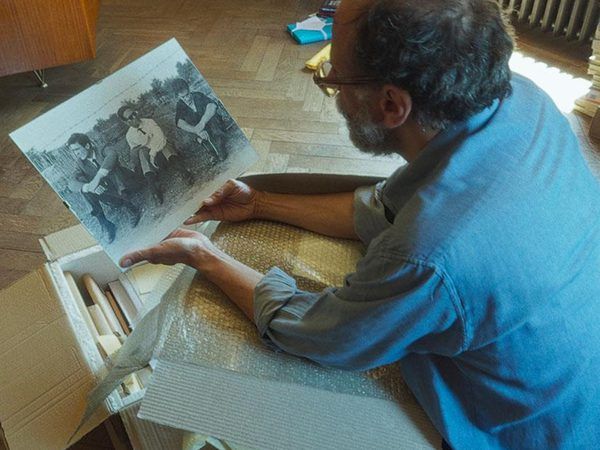
The world of cinema is often defined by its giants, but sometimes, the most illuminating journeys lie in the reflections cast by those who examine their legacies. Luca Guadagnino’s sprawling meditation on the life and legacy of Bernardo Bertolucci is precisely such an endeavor—a challenging, yet deeply engaging exploration of what it means to shape cinematic history.
Guadagnino’s long-standing fascination with the Italian auteur is well-established, a relationship that has evolved from admiration into an ambitious project. This interest crystallized in 2013 when he co-directed Bertolucci on Bertolucci, an immersive feature built from years of interview footage. Now, he continues this pursuit with an even more expansive undertaking: a seven-hour documentary titled Joie De Vivre: Notes, Thoughts, Words, Reflections, Faces, Visions, Around Bernardo Bertolucci And The Cinephilia Of The 20th Century That Is No More.
While the sheer scope of this project is breathtaking, the resulting documentary is far from a simple retrospective. It functions less as a comprehensive biography and more as an enjoyable, if meandering, examination of contemporary cinema culture viewed through the lens of Bertolucci. This approach invites viewers to spend time with Guadagnino and his eclectic group of contributors, offering a unique perspective on how the past still echoes in modern filmmaking.
The voices gathered for this reflection are a constellation of cinematic royalty and critical thinkers. They range from filmmaking colleagues like Martin Scorsese, Alfonso Cuaron, David Cronenberg, and James Gray, to collaborators such as Jeremy Thomas and Debra Winger, alongside influential critics and historians. The discussions offer a fascinating mix: Margot Robbie brings enthusiasm, while French provocateur Catherine Breillet, known for her work on Last Tango in Paris, offers sharp refutations regarding the treatment of Maria Schneider on set. Equally illuminating are figures like Mark Cousins and Murielle Joudet, who delve into Bertolucci’s complex presentations of women and the historical context of his work.
Guadagnino deliberately chose to focus on the positive and the impactful, omitting some of Bertolucci’s less successful projects. This decision gives the film a curious, incomplete portrait, emphasizing personal highlights while sparing less celebrated works like The Dreamers and Little Buddha. This omission suggests an intent not just to celebrate, but to guide, rather than merely chronicle.
Yet, this focus raises an important question for the future of cinema. While the film expertly introduces foundational masterpieces such as 1900, La Luna, and The Last Emperor to newcomers, it misses a vital opportunity to connect Bertolucci’s influence directly with younger filmmakers. Guadagnino’s goal appears to be introducing Bertolucci to a new generation, ensuring his legacy is secured by reaching millennial and Gen Z audiences. This commitment to linking historical depth with contemporary relevance is a smart move, especially given the current trend of cinema being reduced to short-form content.
Ultimately, Joie De Vivre is a captivating, if sprawling, experience. While its extended runtime and meandering structure might present a barrier for some viewers, the underlying enthusiasm and passion for the subject matter are undeniable. It serves as a powerful reminder that the relationship between the past, the present, and the future of cinema is an ongoing, vibrant conversation. It is heartening to witness a filmmaker and his collaborators so fully engaged in making and loving the stories that define our visual world.
Buy on Amazon
Credit
