L’Estranea first look visual review
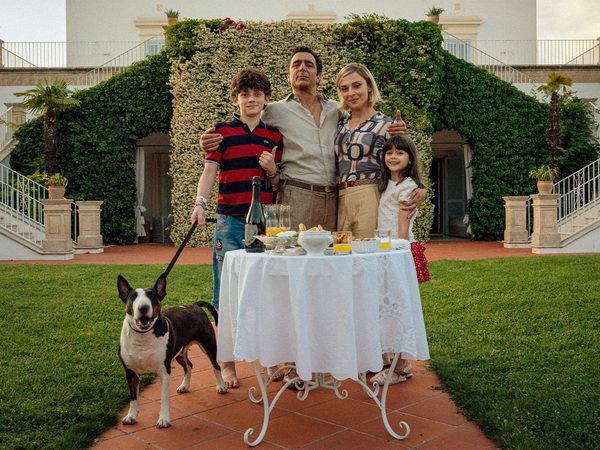
Paolo Strippoli’s latest horror-thriller, L’Estranea (The Spiral), attempts to package the timeless framework of a fairy tale for a grown-up audience, but in doing so, it tests the patience of its viewers.
The film masterfully employs motifs—from circular licorice candies to shrinking loops—to hint at deeper psychological turmoil. The thematic architecture is built around the weight of choices and the painful fallout of a single, fateful day in the life of a wealthy Italian family. Strippoli and co-writer Salvatore de Chirico transform the classic narrative into a contemporary spin on stories like Rumpelstiltskin, laced with a dose of Faustian temptation.
At the core of the story is Matriarch Anna (Jasmine Trinca), who appears poised to achieve success through her children. However, this pursuit quickly descends into tragedy when a sudden crisis forces her to weigh the livelihoods and lives of her loved ones. The narrative pivots on a dramatic dilemma: a mysterious figure, credited only as the Stranger, emerges offering Anna a stark choice. She must decide whether to save her daughter’s life by allowing another child to gain weight, pitting familial bonds against competitive edge in the elite soccer world.
This moral quandary becomes the central engine of the film. As Anna faces repeated instances of trading one person’s fate for another’s, the dilemma piles up, increasing her entanglement in the surrounding misery. What begins as a simple moral choice slowly reveals itself as a far more complex, unsettling psychological unfolding.
The story gains an even sharper edge through the perspective of Alice, a grown-up estranged from her mother. She recognizes the Stranger not as a demon, but as a manifestation of the bargaining stage of grief. This realization allows her to detach, giving Anna—and the audience—an illusion of agency, conveniently absolving her of responsibility for their catastrophic future.
Yet, the film struggles to fully accommodate this complexity. Strippoli’s horror-thriller often relies on broad genre archetypes, focusing on single identifying traits rather than developing nuanced characters. This reliance on established tropes means that the film sometimes fails to make good on the high-order insinuation behind Anna’s motivations.
The film’s impact shifts depending on how the audience processes its repetitive narrative. While the initial chapters use the grotesque—such as Tobia’s rapid weight gain—as a tool for catastrophic storytelling, the true intrigue emerges when the Stranger’s options become increasingly existential. The viewer’s willingness to forgive earlier narrative blunders may ultimately depend on how exhausted they are by watching the same tragic pattern play out repeatedly.
Buy on Amazon
Credit