Mr Nelson Did You Kill People First Look Visuals
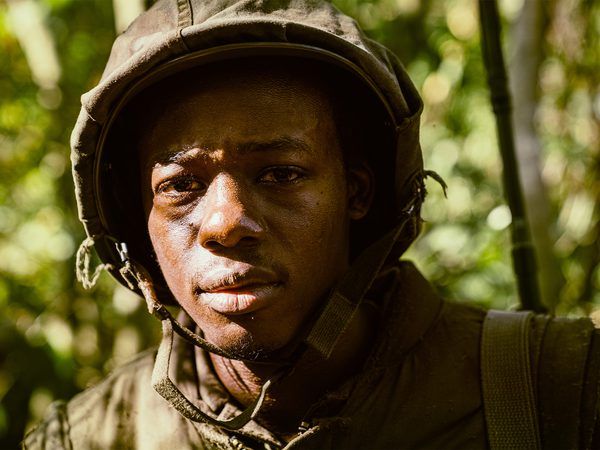
The story of combat is often told through stark imagery of violence, but when that violence is filtered through the lens of a veteran’s life, it becomes something far more intricate. Shinya Tsukamoto’s cinematic adaptation of Allen Nelson’s account of his time in the Vietnam War attempts this, yet in doing so, the film grapples with the sheer scale of bloodshed, often leaving the deeper, more personal complexities of Nelson’s experience feeling somewhat sidelined.
Allen Nelson, a Black veteran, carried the weight of his service and the subsequent moral questions for decades. His time in the Marines was marked by atrocities, and upon returning home, he struggled to reconcile his actions with his domestic life. It was through a lifetime of battling the symptoms of post-traumatic stress disorder that Nelson found a path to penance: traveling the world, sharing a brutally honest account of his wartime experiences. In Japan alone, Nelson spoke over 1200 times, demonstrating the profound, enduring nature of the guilt he carried.
Tsukamoto’s film is undeniably steeped in cinematic brutality. The visual landscape is unrelenting: bullets rain down, limbs are ripped, and the scene is saturated with the horror of war. The sheer scale of the bloodshed is evident, capturing the chaos and terror of the conflict. Nelson himself was an active participant in these events, an experience that later drove him to seek therapeutic release and a way to quiet the internal noise that haunted him.
Nelson’s journey toward healing ultimately found an unconventional method. Rather than isolating his pain, he discovered that sharing his experiences was key to moving forward. In one of the film’s most moving sequences, Nelson recounts his ordeal to his son’s high school class. Tsukamoto employs a technique of visual shock, foregoing explicit detail in favor of a piercing sound that conveys the appropriate level of disgust and trauma, reflecting the visceral impact of the memories Nelson carries.
However, while the film masterfully conveys the personal guilt and the lifelong pain Nelson endured, it struggles to fully address a crucial dimension of his identity. Nelson’s experience as a Black man in Vietnam, a conflict fought against the backdrop of American segregation, introduces a layer of contradiction and specificity that remains largely unexamined. The narrative tends to focus on the universal themes of individual responsibility in war, leaving the complex interplay between Nelson’s identity, his community, and the political contradictions of the time underserved.
Ultimately, the film serves as a powerful exploration of trauma, but it leaves the viewer reflecting on the fine line between historical spectacle and personal truth. It showcases the devastating impact of war while hinting at the intricate, often untold, stories of the individuals who lived through it.
Buy on Amazon
Credit