Murnau’s Visual World and Life
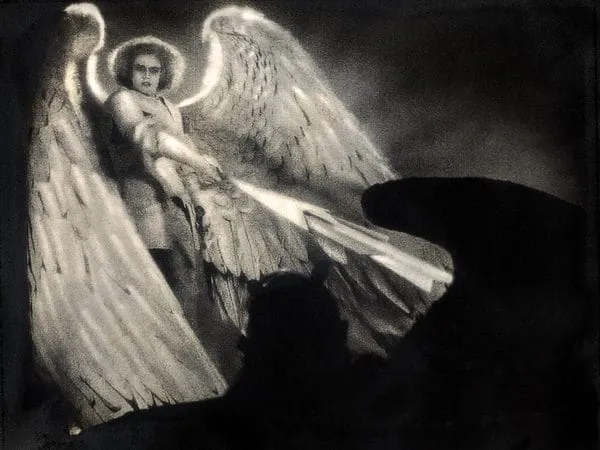
The realm of cinema is littered with shadows, but few figures cast as long and as intricately as FW Murnau. On the centenary of his silent masterpiece, Faust, we don’t just look at a film; we examine a legacy steeped in the supernatural, myth, and the peculiar tragedy of a life lived on the edge of legend.
Murnau possessed a singular gift for conjuring the extraordinary from the frame. While many directors navigate the dramatic, Murnau excelled at weaving phantasmagorical visions, earning praise from contemporaries like Lotte Eisner, who noted that no other director managed to capture the supernatural with such mastery.
His filmography is shadowed by near-loss and resurrection. Several of his works, including Nosferatu: A Symphony of Horror and The Burning Soil, were lost in their entirety, yet their stories persist through intriguing tales of destruction and rediscovery. Films like Phantom and City Girl, alongside the legendary Faust, have been reinstated through historical discoveries, offering tantalizing glimpses into a cinematic past.
At the heart of his vision was a complex exploration of human fate. In his final German film, Faust, Murnau presented a grand infernal spectacle, charting a wager between Heaven and Hell. Faust‘s journey is an epic descent into hedonism and tragedy, where the pursuit of pleasure ultimately leads to a devastating union with Gretchen, an ending that settles Mephisto’s claim to the earth through the force of tragic love.
Murnau’s mastery lay not only in storytelling but in his visual innovation. He pioneered “the unchained camera” in The Last Laugh, combining cutting-edge techniques—scale models, forced perspective, and clever editing—to create a new height of visual spectacle. His painterly eye, influenced by masters like Franz Stassen and August von Kreling, ensured that the compositions and the masterful use of light and shadow in his work felt both arresting and timeless.
Beneath the surface of his films, Murnau explored profound, often suppressed themes. As a closeted homosexual living in a society that condemned such identities, his work implicitly tackled the moral forces that seek to control human desire. The pact with Mephisto is ultimately undone by the power of love, a theme that foreshadowed the larger social battles for equality that would take generations to resolve.
The allure of Murnau’s life is inextricably linked to dramatic, almost mythical circumstances. Following the success of his American debut, Sunrise: A Song of Two Humans, Murnau and studio head William Fox faced a calamitous decline, marked by serious accidents and financial ruin during the Depression era. This narrative of success followed by tragedy lends a poignant, Faustian quality to his entire existence.
Adding to the surrounding mythology are strange, persistent whispers about his final years. Rumours, even those perpetuated in popular lore, swirl around his death, deepening the mystery of his legacy. This sense of the occult threads through his life, notably through his early association with occultist producer Albin Grau, who was behind the visual style of Nosferatu. This relationship, dramatized in films like Shadow of the Vampire, adds a layer of fascinating, albeit spectral, legend to Murnau’s story.
Even his physical remains have entered the realm of the mysterious. The theft of Murnau’s skull in 2015, followed by reports of candle wax at the site of his tomb, suggests a persistent, almost occult connection to his legacy. This, alongside the rediscovery of The Faust Bible, a 400-page collection of sketches and designs gifted by set designers, further illuminates the meticulous, almost alchemical process behind his cinematic genius.
Despite being often overshadowed by monumental works like Nosferatu and Sunrise, Faust remains a towering achievement. It stands as a testament to Murnau’s ability to synthesize light, shadow, and profound human experience into a cinematic language that continues to inspire filmmakers today.
Buy on Amazon
Credit
