Rebellion First Look Action Review
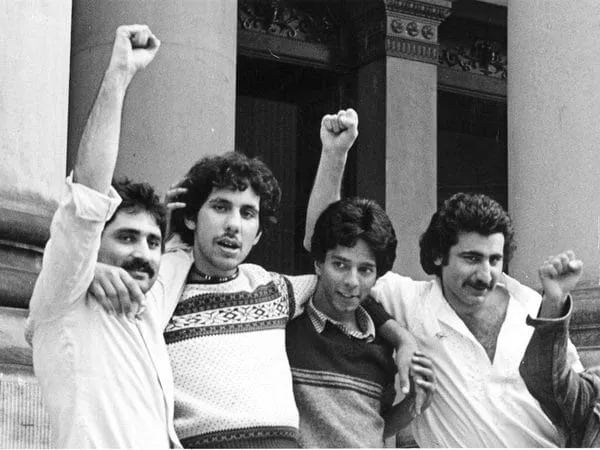
In a world often saturated with grim headlines and political deadlock, there remains a potent, undying flame of resistance. It is a reminder that the fire that fueled social justice decades ago is not just history—it is an urgent force for the present.
Ken Fero and Tariq Mehmood’s documentary, Rebellion, delivers this vital message by anchoring itself in a powerful, yet deeply personal, historical moment: the 1981 defence of the Bradford Twelve. This landmark trial, where activists faced charges for possessing Molotov cocktails, serves as a powerful starting point for exploring the decades of radical social justice movements that blossomed from the crucible of Bradford in the Seventies and Eighties.
The film masterfully juxtaposes this historical context with the contemporary landscape. While the opening scenes invoke the raw, simmering rage of past struggles against racialized violence, the narrative quickly pivots to show how this historical fight continues to pulse in the modern world. We see the past not as a distant memory, but as a blueprint for present-day activism.
The documentary meticulously builds a case file of systemic racial abuse suffered by the subjects, primarily members of the United Black Youth League. It charts the crucial shifts in resistance—from the formation of the League and the Asian Youth Movement to the maternal fight of Anwar Ditta to reclaim her children from The Home Office. These milestones are not merely historical footnotes; they are the coordinates for a protest movement that spans time.
The creators employ a dynamic visual style, using archival footage to paint broad, evocative strokes of simmering scenes, punctuated by the raw energy of placards and expressions of rage. This visual vocabulary cultivates tension, demonstrating that the emotional weight of resistance can be conveyed without needing heavy narration.
By pairing the visceral, archival footage with contemporary protest movements, Rebellion radically transposes history, positioning past freedom fighters alongside today’s demonstrators. It suggests that the spirit of anti-Imperialism and progressive protest is inherently timeless, demonstrating that the framework for challenging injustice remains strikingly accurate and timely.
The film doesn’t just offer a history lesson; it serves as an urgent reminder that protest still possesses immense power. As political currents shift, and as global events demand immediate moral reckoning, the message is clear: the fight for justice endures. It shows that the energy of those decades-old movements continues to burn bright, providing an inspiring roadmap for contemporary viewers who seek meaningful action today.
Buy on Amazon
Credit