Resident Evil’s Posthuman Shift
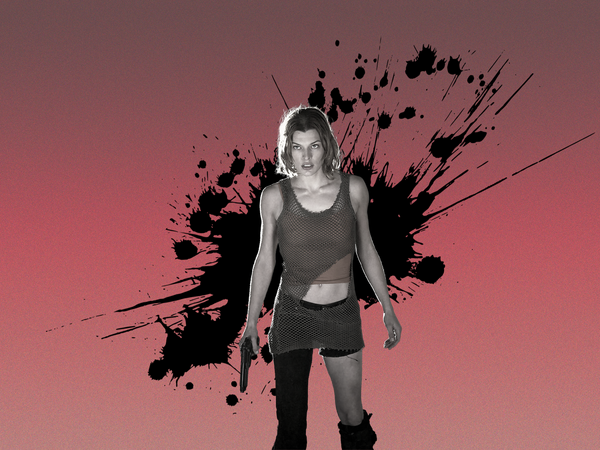
When we look at the cinematic legacy of the Resident Evil franchise, we aren’t just watching zombies fight for survival; we are witnessing a profound exploration of mutation, posthuman identity, and the mechanics of the digital world. At the heart of this evolution is Milla Jovovich, a queer icon whose journey through these films embodies the very notion of reinvention.
The original live-action series is a sprawling, colorful tapestry, rich with wirework, CGI, and narrative flair. Yet, in a curious way, the films succeed as a “video game adaptation” by weaving the logic of gaming directly into their fabric. This approach transforms the narrative, using digital systems and surveillance not just as backdrops, but as active forces shaping the characters’ fate.
The story follows Alice, a former operative for the monolithic Umbrella Corporation. After a global outbreak turns much of the world into the undead, Alice and her allies must navigate Umbrella’s machinations, culminating in a desperate quest for an antidote.
But before we encounter any human face, we encounter the true antagonist: the machine. The franchise opens not with conventional cinematic grandeur, but with a video game-style loadout screen, delivering a confidential report on Umbrella’s history. This immediate immersion establishes a dominant, almost divine, presence—the “system”—that frames every human action.
This machine perspective is powerfully echoed throughout the series. Through digital-readouts and surveillance feeds, the audience is placed squarely in the shoes of the Umbrella AI security apparatus, the “Red Queen,” which orchestrates the carnage. Scenes often start with wireframe renderings and moving markers, embedding narrative events within a vast, watchful grid of data. This aesthetic choice forces us to see the action not just as a physical struggle, but as a carefully monitored event within a larger, algorithmic reality.
This fascination with the digital mirrors a broader media theory. As media theorist Alexander Galloway suggests, video games depend equally on the player and the machine, creating what is called an “ambience act.” The Resident Evil films resonate with this concept, focusing on digital models and surveillance that exert a pervasive, ambient influence over the characters’ experiences.
The concept of mutable identity is central to Alice’s arc. Like an avatar, Alice repeatedly wakes up in new environments with no memory of how she arrived, her memories and abilities wiped and restored at the screenwriter’s whim. This instability is further explored through cloning, which is introduced as a shocking plot point. Alice is revealed to be a clone, violently discarded alongside her duplicates, initiating a complex exploration of what it means to be real.
This theme of fluidity becomes physical and philosophical. The later films, such as Resident Evil: Afterlife and Resident Evil: Retribution, intentionally embrace an artificial style. Countering pure photorealism, the action is often rendered with flat color grading and exaggerated physics, minimizing real-world friction. This synthetic look, while sometimes leaning into camp, projects a sense of plasticity—the idea that reality is malleable.
This malleability culminates in a profound philosophical statement. In the final chapter, the action accelerates into a blistering, immediate present-tense immediacy. Identity is not fixed; it is dynamically made and remade along the leading edge of an unfolding moment. Alice’s ultimate realization—“I am now”—and her final declaration, “My name is Alice,” suggest that ongoingness and mutable identity are the true power of the posthuman experience.
Credit
