Reviewing Marie Antoinette: Passing the Baton
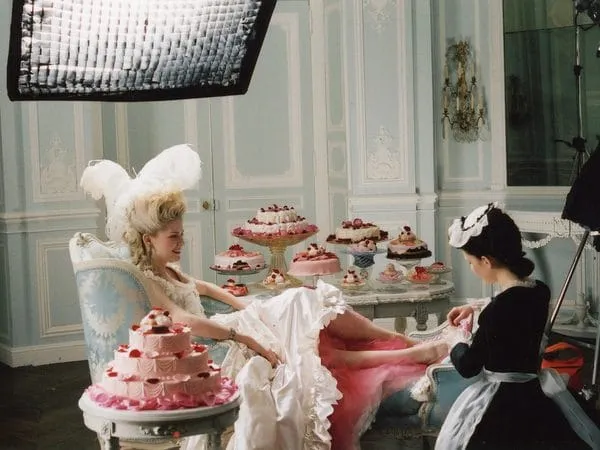
Some of the most profound art is born not just from vision, but from witnessing the process. This is the beautiful, sometimes chaotic, journey of a mother and daughter, captured on film.
The story of Making Marie Antoinette is steeped in the rich history of filmmaking, yet its true heart lies in the intimate bond between director Sofia Coppola and her mother, Eleanor Coppola. This narrative is pieced together from behind-the-scenes footage and personal journal entries, transforming behind-the-scenes chaos into a moving portrait of a mother observing her daughter’s artistic ascent.
Documentaries about the making-of process often risk feeling like mere ephemera. But when Eleanor Coppola picked up a camera and started filming the intense on-set environment of her husband Francis Coppola’s 1979 production of Apocalypse Now in her film Hearts of Darkness, she demonstrated an uncanny ability to extract profound insight from the sheer act of creation. Armed with the perspective of a wife and a mother who understood their family’s unique talents and quirks, she became an invaluable observer.
This maternal lens guided her into the next great artistic endeavor: Sofia’s ambitious $40 million project, Making Marie Antoinette. As Sofia sought to reimagine a historical figure through a distinctly feminine, candy-colored lens, the undertaking demanded a massive crew and lavish staging, including filming within the Palace of Versailles.
Eleanor joined her daughter on this courageous venture, moving through the spectacle dressed in black, witnessing the ambition of female artistry unfold. It became a shared reflection on the complexities of ambition, the cost of spectacle, and the sheer tenacity required to bring a vision to life.
The resulting footage, shot over 80 hours on set in 2005, lay dormant until the world entered lockdown. It was only after Eleanor’s passing in 2024 that Sofia gathered these incomplete materials, weaving them with her mother’s private reflections from her journals. This posthumous transmission gives Making Marie Antoinette the quality of a tribute as much as a film.
The footage itself offers a delightful mix of charm and wisdom. Watching the digital camera reveals nostalgic glimpses of the film’s pastel frippery—a pink-wigged Kirsten Dunst gliding through gilded rooms—but it also reveals moments of unexpected humor. There are flashes of camaraderie, like someone cracking a Spinal Tap joke at the sight of a fog machine, or Sofia sharing a candid thought about the pressures of portraying a character: “They treat you like you’re just a dumb girl and you let them. But every once in a while, you let them know you’re not an idiot.”
In its endless reflection, this unassuming film acts as a Hall of Mirrors—intricate, melancholy, and wonderfully human. It serves as a powerful feedback loop, beautifully capturing the passing of the baton and the enduring legacy of artistry.
Buy on Amazon
Credit