Sarah Maldoror: Poetry of Resistance
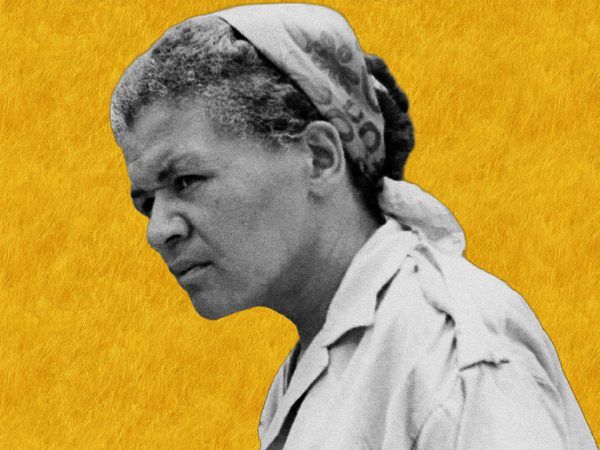
A recent BFI season, curated by Annouchka de Andrade on her mother’s groundbreaking work, opened a vital conversation about restoration, cultural memory, and the sheer endurance of political art in an era defined by flattened aesthetics.
The exploration began with a fundamental question: What is the line between art and protest? As James Baldwin observed, there is none. Both exist simultaneously within literature and film as powerful expressions of engagement with the world. This idea perfectly captures the trajectory of Sarah Maldoror’s career, which was a profound negotiation between the artistic and the political.
Born in France but with roots in Guadeloupe, Maldoror spent her career navigating the volatile tensions of colonialism across Africa, particularly in Angola. Her cinematic lens was used to examine the bloodied history and violence of the colonial era, juxtaposing it against the vibrant tapestry of African art. Early in her career, she was deeply involved in anti-colonial movements, notably assisting on the landmark anti-colonial masterclass The Battle of Algiers in 1966.
Maldoror’s filmmaking sought to unearth the routine abuses and torture faced by anti-colonialist fighters, a practice that continued through her debut short film Monangambé in 1968, and her feature film Sambizanga in 1972—an exhilarating depiction of Angola’s fight for self-determination. This work was also a powerful exploration of Black womanhood. As the acclaimed Black Feminist theorist bell hooks noted, the women depicted in the film were shown in ways previously unseen: bonded, haunted, and deeply embodied in their grief.
But the story of Maldoror is not just about the screen; it is about the necessity of preserving a legacy that, for decades, was often invisible. As a pioneering Black woman director, Maldoror and her sister, Henda Ducados, faced the challenge of safeguarding their work amid the erasure that often defines the fate of Black women artists in the industry.
In 2018, they established The Association of Friends of Sarah Maldoror to ensure her work would endure. This effort was fuelled by a realization that the wave of public attention—catalyzed by movements like #MeToo and #BlackLivesMatter—demanded that people finally look closer at Black filmmakers they had previously overlooked.
For Annouchka de Andrade, this visibility was transformative. She recalls that over the last fifteen to twenty years of her mother’s life, few sought out her work. It was only after Maldoror’s passing that the world began paying serious attention. This growing recognition spurred vital restoration efforts. With the help of figures like Martin Scorsese, the World Cinema Project, and Cineteca di Bologna, the film Sambizanga was restored, ensuring its place in the cinematic canon.
To ensure audiences grasp the full breadth of Maldoror’s vision—which encompassed forty-six film entries—the season highlighted her commitment to poetry and theatre. The program featured a showcase of her short films, including And the Dogs Kept Silent (1978), The Mask of Words (1987), and Slave’s Route: Glimpses of Memory (2003), demonstrating her deep passion for the reimagining of poet Aimé Césaire.
Maldoror herself built her life around poetry; for her, poetry was inherently politics. Her daughters continue this mission, bringing new life to her legacy by re-examining her relationship with memory. Through screenings and discussions, they are ensuring that the full, complex vision of Sarah Maldoror—a work that asked us to consider both horror and beauty—is not only remembered but actively inspires us to persist against injustice.
Her enduring work reminds us that while the external world changes, the internal fight for a world free and fair for Black people and Black women remains a revolutionary, essential pursuit.
Buy on Amazon
Credit