Scouting Hollywood’s changing landscapes
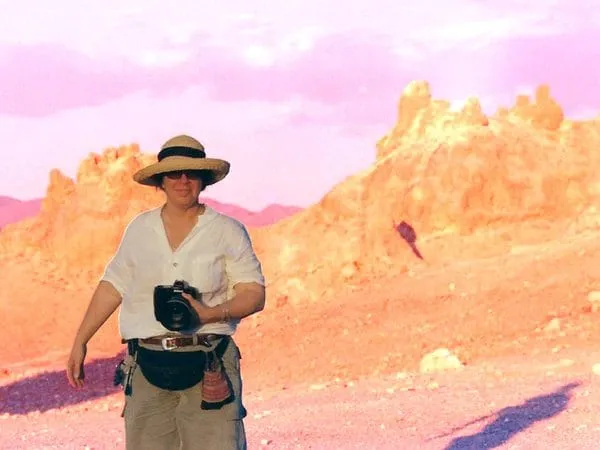
The map of cinema is in constant motion, and the geography of Hollywood is no exception. For decades, the gravitational pull of California dictated where stories were filmed, creating a world where the globe bent to the demands of the studio. But today, that dynamic has dramatically shifted. The quest for the perfect cinematic backdrop has traded latitude and longitude for financial incentives, transforming location scouting from an act of pure creative vision into a complex dance of economics and politics.
Lori Balton, one of Hollywood’s most celebrated location scouts, is at the center of this evolution. With a career that has shaped the visual language of classics like Heat and Inception, Balton’s perspective offers a fascinating look at how the very definition of a cinematic locale is being reshaped. She recounts the seismic shift in her work, moving from a time when location selection was driven purely by artistic necessity to an era defined by international rebates and governmental agreements.
The shift is profound. While old Hollywood relied on the inherent magic of Los Angeles, modern filmmaking is now a global scavenger hunt. Today, the story of a film might be set in the golden Saharan sun of Morocco for a tax rebate, or in the otherworldly expanse of Wadi Rum in Saudi Arabia for a generous incentive. Hungary has become the go-to for budget-conscious productions, and Australia offers vast, breathtaking landscapes for a fraction of the cost. Places like Abu Dhabi’s Liwa desert and Jordan’s Wadi Rum have become the default settings for epic narratives like Dune and Rogue One.
This transformation highlights a crucial difference: location scouting used to be about finding a place that evoked an unshakeable mood or texture. It has now become about finding a place that offers the best financial package. Balton notes this shift keenly: “I used to get handed a script and they’d ask me where we should shoot. Now I get handed a script and they tell me which countries I have to shoot in according to incentives.” This pivot from creative fluidity to financial constraint is the defining characteristic of modern Hollywood.
Yet, even as the mechanics of production evolve, the core value of true scouting remains paramount. Balton argues that the essence of a cinematic location lies not in its coordinates, but in its evocative power. She champions a philosophy that seeks out the gritty, the off-the-beaten-path, asserting that the real flavor of a place is irreplaceable, a principle echoed by Mark Twain’s observation: “Travel is fatal to prejudice, bigotry and narrow-mindedness.”
This quest for authentic geography is further driven by new technologies, particularly the rise of visual effects. Modern filmmaking allows locations to be transported and re-imagined, freeing scouts to focus on the narrative potential rather than logistical limitations. This is evident in projects like Shang-Chi and the Legend of the Ten Rings, where stunning environments are captured through meticulous plate work, demonstrating that the physical location is less important than the story it tells.
However, behind the dazzling spectacle of global incentives lies a deeper concern about labor. Balton, a long-time union member, addresses the systemic exploitation that accompanies this new system. She stresses that the true casualties of the shifting landscape are not the industry titans, but the crew members, drivers, and technicians—the working-class infrastructure that has taken generations to build. The argument is clear: while incentives reduce costs, they risk eroding the protections built by unions that ensure fair wages and safety.
Ultimately, Balton’s enduring message is one of curiosity. She reminds us that to be a great location scout, one must be genuinely curious about people and believe in the potential of cinema. In an industry that has often mistaken a brand for a place, this essential curiosity may be the most radical and necessary position of all, offering a sustainable path forward for the world of filmmaking.
Buy on Amazon
Credit