Send the Klara and the Sun review back to the factory
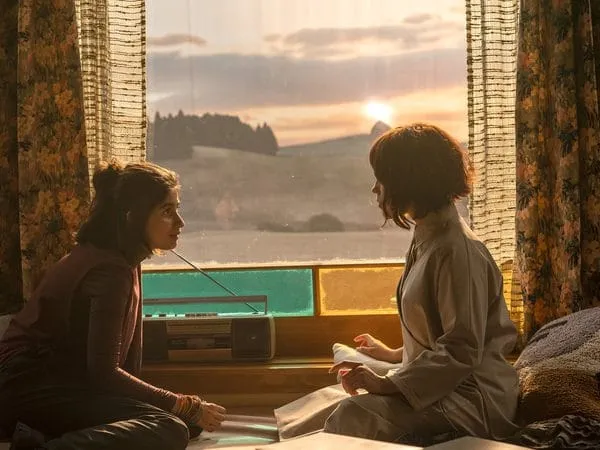
In a world increasingly preoccupied with the rise of artificial intelligence, Taika Waititi has offered us something far lighter than a doomsday scenario. His film Klara and the Sun transports us not to a future defined by existential dread, but to a remarkably whimsical vision where the focus shifts from global extinction to the quiet, complicated dynamics of human connection and manufactured companionship.
The film sets a unique stage: a post-apocalyptic landscape where the internet has vanished, and humanity finds solace in humanoid artificial friends. This setting is immediately grounded by a strikingly visual aesthetic—a blend of sparkling pastels and deliberate visual glitches that mirror the internal world of its protagonist, Klara.
We meet Klara, a B1 model artificial friend who enters society as a glossy, almost vacant sale item. Her journey is one of seeking meaning, as she interacts with the world, believing the rising sun to be a divine manifestation. She navigates a complex environment, moving from a run-down robot shop to a remote mansion surrounded by swaying cornfields.
Klara‘s introduction is laced with charming eccentricity. She is soon paired with Josie, who has undergone a unique biological procedure to become an instant genius. This arrangement creates a fascinating, if precarious, dynamic. Klara, initially viewing herself as an assistant to prop up a fractured family unit, finds herself navigating the deeply emotional undercurrents of human relationships.
However, beneath the surface of this sweet narrative, the film digs into more profound questions. It explores the complexities of love, family obligation, and the often-obscure motivations that drive human behavior. The central tension arises from the contrast between the ethereal search for meaning and the stark reality of human circumstances, particularly concerning the mother figure and the tragedy that shadows the family.
While Waititi masterfully uses his signature comedic touch to introduce these societal shifts and his own worldbuilding, the film sometimes struggles to reconcile its whimsical delivery with the heavy philosophical ideas it touches upon. The film attempts to balance the lighthearted, almost feel-good elements with a serious exploration of human drama, leading to moments where the emotional stakes feel deliberately diffused.
Visually, the film is a vibrant tapestry, employing techniques like lens flare and digital glitches to emphasize Klara’s evolving perspective. It attempts to capture the uncanny glow of classic science fiction while delivering a distinctly contemporary, almost nostalgic sensibility, resulting in a look that is both dazzling and slightly fractured.
Buy on Amazon
Credit