Shane Gillis drops F-bomb during Dr Seuss sketch
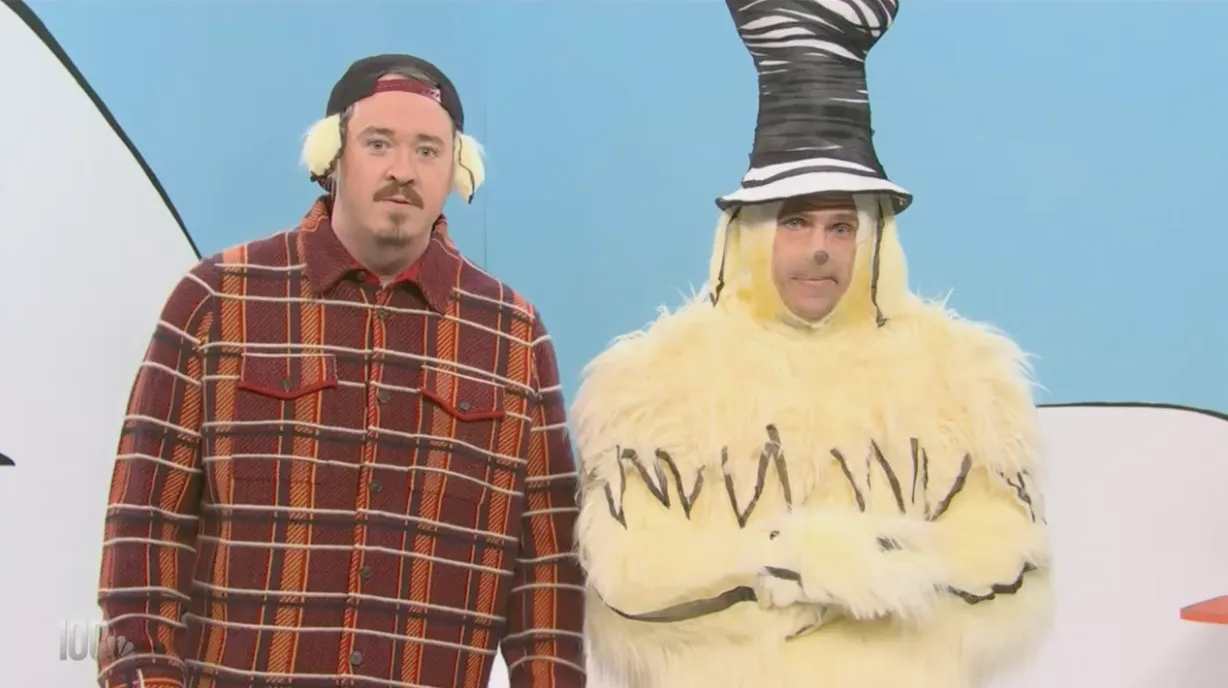
The Zootopia of Words: How a Slip-Up Defined a Sketch
The world of sketch comedy often thrives on the precise balance of absurdity and timing, but sometimes, the most memorable moments arise from unexpected, spontaneous moments. During his hosting stint on Saturday Night Live, comedian Shane Gillis was immersed in a performance inspired by the whimsical world of Dr. Seuss. This particular sketch, set to the backdrop of a classic reading like Green Eggs and Ham, provided a perfect canvas for Gillis to explore the hilarious dynamics of family and defense.
Gillis played Zackary, a character defined by his aggressively protective nature. His scene involved Zackary attempting to shield his elderly father from the relentless, insistent questioning of Sam-I-Am. The setup was classic: a simple, sweet narrative about food, disrupted by a conflict of wills between the earnest protagonist and the demanding force of the interviewer.
As the scene unfolded, the comedic tension reached a peak. Gillis’s portrayal of Zackary—a character constantly on the defensive—led to an accidental, yet deeply impactful, verbal slip. Midst the frantic defense against Sam-I-Am’s relentless pressure, a far less innocuous word slipped out, injecting an unexpected dose of reality into the fantastical scenario.
This spontaneous inclusion turned a gentle reading into a moment of raw, human comedy. It was a perfect example of how even the most meticulously planned sketches can be elevated by the organic energy of the performers. The slip-up became less of a mistake and more of a perfect, raw snapshot of the exasperation and chaotic love inherent in family interactions.
The sketch, featuring the dynamic interplay between Gillis and Andrew Dismukes, demonstrated the power of situational comedy. It showed that when a performer leans into a character’s intensity, the audience is often drawn into the genuine, messy heart of the interaction. The resulting moment served as a brilliant highlight, proving that sometimes, the most effective punchlines are the ones that emerge unexpectedly from the performance itself.
Buy on Amazon
Credit