Shatner Mask becomes Michael Myers Face
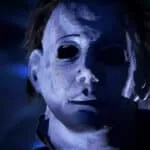
The Cosmic Collision: How a Captain Kirk Mask Became the Face of Horror
The most chilling faces in cinematic history often hide the most surprising origins. Consider the iconic mask of Michael Myers from the classic film Halloween”>Halloween (1978). It is a blank, unknowable visage of pure menace, yet its story is rooted in something far more familiar: the face of Star Trek’s Captain Kirk.
This seemingly impossible crossover is a masterclass in cinematic transformation. The legend of Michael Myers is not just a tale of evil; it is a fascinating piece of costume design and psychological trickery. It began when production designer Tommy Lee Wallace sought a specific mask for the film, and in doing so, inadvertently forged one of horror cinema’s most enduring and recognizable images.
The Birth of the Shape
On a low-budget production of Halloween”>Halloween, director John Carpenter needed a mask that was disturbing yet simple. While other props offered spooky options, Wallace eventually found a Captain Kirk mask. It wasn’t inherently evil, but it was blank—a neutral, featureless human face, perfect for becoming a vessel of terror. Interestingly, this mask was purchased for a mere $1.98.
The real magic happened in the modification. Wallace didn’t just use the mask; he began a meticulous process of erasure. He removed familiar elements—eyebrows, sideburns, and defining features—and painted the face a stark, flat white. The goal was to strip the identity away, transforming a familiar hero into an anonymous, utterly vacant figure.
The subtle changes were everything. By enlarging the eyeholes and eliminating expressions, the mask ceased to reveal thoughts and instead became a vacuum. It offered no signals, forcing the audience to project their own dread onto the blankness. The face didn’t just look scary; it became unknowable, reflecting the primal fear that lies beneath the surface of human expression.
The Power of the Unseen
This transformation hinges on a powerful cinematic concept known as the Kuleshov effect. When an actor displays a neutral face, the context surrounding the shot dictates the emotion the audience perceives. The mask, devoid of any expression, became a perfect blank slate. It allowed the surrounding darkness, the ominous score, and the setting to fill the void, making the audience’s imagination the true source of the horror.
The mask works because it refuses to offer easy answers. It forces us to confront the terror we project onto it. The face of Captain Kirk, once a symbol of exploration and curiosity, is now trapped in a costume, embodying an unstoppable force. The captain who once navigated the stars now stalks a suburban street, demonstrating how easily a familiar image can be twisted into something monstrous.
A Legacy of Irony
The irony deepens when considering the history of the mask itself. Some accounts suggest that the mold used for the Captain Kirk mask originated from William Shatner’s own makeup department, a ‘death mask’ used for prosthetics. This historical connection links the mask not just to Hollywood legends, but to the very infrastructure of cinematic creation.
William Shatner himself has shared amusing anecdotes about the mask’s legacy, admitting that while he doesn’t know the full history, he enjoys the joke of his face becoming synonymous with horror. The mask thus becomes an unlikely bridge between the hopeful promise of space exploration and the dark quiet of a haunted neighborhood.
Ultimately, the enduring power of the Halloween”>Halloween mask lies in this beautiful accident: a familiar face stripped of humanity, transforming from the beacon of the future into a silent, terrifying presence of pure, unexplainable evil.
Buy on Amazon
Credit