Teshigahara Surveys the Abyss
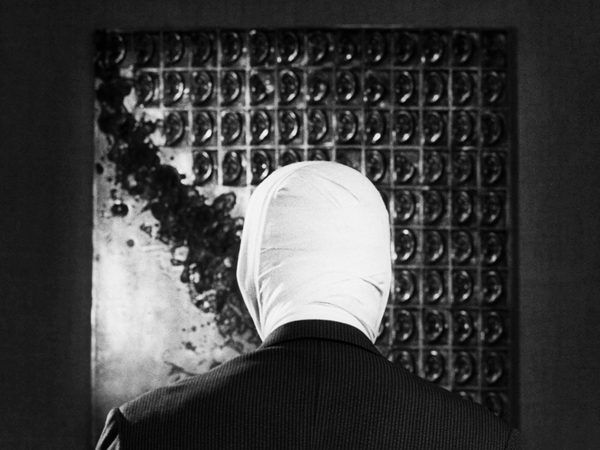
As The Face of Another turns sixty, the legacy of Japanese New Wave director Hiroshi Teshigahara continues to haunt audiences. His cinematic landscapes are not merely settings; they are existential battlegrounds where alienation, exploitation, and fractured identity play out with relentless intensity.
Teshigahara’s work delves into the profound human experience of feeling burdened—the spectre of exploitation, the weight of forced labor, and the sheer impossibility of existing within sprawling, endless spaces. His protagonists are constantly grappling with this sense of invisibility, navigating environments that threaten to swallow them whole.
From his debut feature, Pitfall, Teshigahara immediately plunged into a moral labyrinth involving industrial strife and brutal worker exploitation. The film tells a stark murder mystery concerning a mine worker framed for a crime, exploring the desperation that drives figures toward inevitable ends. Even in this unfolding drama, the sense of invisibility lingers; men like the Miner lament their fate, yearning only to escape the cycle of labor or find some form of rebirth.
This exploration into existential dread is magnified when Teshigahara uses space itself as a character. In Pitfall, the endless depths of the mines enforce physical and psychological confinement. In later works like The Face of Another, the sprawl of the metropolis renders his characters invisible, emphasizing how easily human figures can disappear within an overwhelming urban expanse.
Teshigahara pushes this theme further in films that strip away autonomy entirely. In The Woman in the Dunes, the entomologist Niki Jupei is trapped in shifting desert dunes with a young widow. Here, the battle shifts from industrial exploitation to elemental survival; every moment is a grueling negotiation against the relentless heat and the crushing weight of sand that threatens to bury them alive. The characters are reduced to tiny, inconsequential figures defined only by the ceaseless labor required simply to survive.
The quest for freedom becomes intensely spiritual in these environments. Jupei’s desperate plea to see the sea and the horizon—a fleeting moment of escape from the sand—underscores a deeper human longing. It is this desire for something different, something better than what exists, that defines Teshigahara’s artistic concern.
In The Face of Another, this tension between internal reality and external appearance reaches a fascinating peak. The protagonist, Okuyama, an engineer recovering from industrial burns, is offered a prosthetic mask—a second face that threatens to transform him. This act foregrounds the artificiality of the world, forcing the viewer to confront the dissonance between his old self and the anonymous persona he adopts. It becomes a potent study of what defines identity when agency is denied.
Ultimately, Teshigahara’s cinema is less about offering easy answers than about capturing the inescapable reality that his characters face. Despite the bleakness of their circumstances—the violence, the loneliness under capitalism—there remains an empathic flicker of hope. It resides not in a guarantee of escape, but in the very act of striving; in the relentless human desire to chip away at what has been lost and strive for a self that is truly seen.
Buy on Amazon
Credit
