The Price of Conformity: Carrie and Crystal Lake
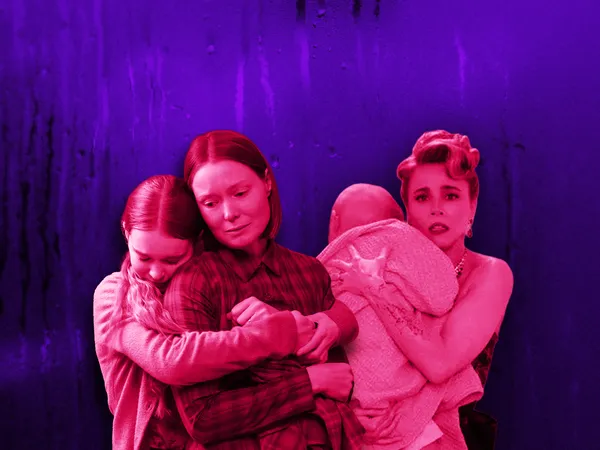
As society increasingly champions restrictive ideals of femininity, the question arises: how can the seemingly “monstrous feminine” channel intense female rage into genuine rebellion?
Horror cinema has long utilized the archetype of the monstrous feminine to explore violent resistance against societal norms. Coined by Barbara Creed in 1993, this concept describes what makes women “shocking, terrifying, horrific, abject.” It serves as a crucial frame for examining how cinematic narratives construct women’s bodies, sexuality, and reproductive functions as sources of fear, forcing viewers to question whether these tropes are truly empowering or merely derogatory hindrances.
Brian De Palma’s Carrie remains one of the most influential depictions of this archetype. Set against the backdrop of a repressive America, the film taps into anxieties surrounding rising conservative shifts and renewed debates over gender liberation. Alongside Mike Flanagan’s eight-part adaptation, Crystal Lake, which explores Pamela Voorhees’ evolution into a murderous mother, both series invite us to look at how shame, repression, social exclusion, and grief shape explosive rage.
In Carrie, the narrative confronts the cutthroat nature of coming of age. Carrie White, raised by a fanatically religious mother, is forced to face the harsh reality of public high school. The film captures the deep-seated trauma of years of abuse, but Flanagan’s adaptation modernizes this suffering, pushing Carrie’s private vulnerability into a viral spectacle. The infamous locker-room humiliation—where the first period triggers terror and shame—becomes a potent symbol of the body society demands be concealed. This scene, featuring blood, substantiates the idea that the reproductive system is an abhorrent and grotesque spectacle, directly linking the woman as a demon to the theme of visceral fear.
This theme of shame is magnified by the contemporary landscape. While menstrual education has advanced, the stigma surrounding women’s bodies persists. Data shows that a significant number of young people hide their period, and the visible manifestation of menstruation remains a source of public discomfort. This connects to the notion that women’s bodies are subject to constant scrutiny, whether through social media or legislative attempts at menstrual surveillance.
The tension extends to authority. In Carrie, Margaret White’s Christian fundamentalism dictates control over her daughter’s knowledge. She weaponizes the secrecy surrounding menstruation, refusing to allow Carrie independence. Yet, Margaret herself is presented as a victim, a woman terrified of a corrupt world. This dynamic highlights how internalized repression, whether imposed by family or by broader societal forces, becomes a powerful catalyst for rage.
Similarly, in Crystal Lake, Pamela Voorhees embodies a different facet of this monstrous femininity. While her son, Jason, is a figure of peer rejection, Pamela internalizes his exclusion as her own maternal failure. Her rage is fueled by a sense of lost agency. In the original story, Pamela’s evolution as a killer challenges the narrative of motherhood, suggesting that the monstrous state can emerge from maternal devotion and suppressed pain.
Both narratives ultimately explore a complex fantasy: the idea of female retaliation. When women face systemic oppression and tangible violence—including allegations of sexual assault—the fantasy of retribution gains urgency. While the monstrous feminine represents resistance, it also serves as a cathartic escape. It allows viewers to witness a fantasy where women retaliate against patriarchal cruelty. Despite the inherent limitations of this fictional violence, it reflects a universal anger, suggesting that the monstrous feminine is not just resistance, but a powerful, visceral consequence of an oppressive cycle of fear and control.
Buy on Amazon
Credit