What Belongs to Others first look visuals
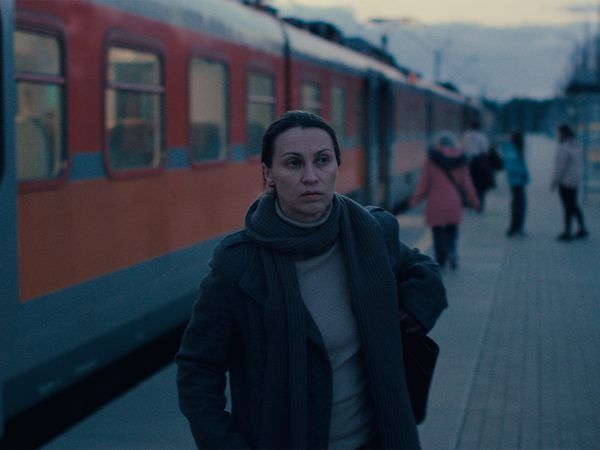
Some stories are spun from shadows, and some, unexpectedly, find the light. Grzegorz Dębowski’s feature film, What Belongs To Others, is one of the latter—a taut psychological thriller wrapped in a surprisingly tender exploration of precarity, class, and the difficult road to redemption.
The narrative plunges the viewer into the world of two professional burglars grappling with the margins of Polish precarity. At the heart of the story is Kasia (played by Monika Sabina Kwiatkowska), a middle-aged woman navigating a life defined by debt and instability, whose existence soon becomes inextricably linked to a dead man.
Kasia assumes the role of the mysterious dead man’s girlfriend, a masquerade that quickly morphs into a complex, life-altering obsession. As she chases the scattered trail of addresses, Kasia doesn’t just hunt for money; she uncovers a portrait of a man undone by bad luck and poor choices, and in doing so, she begins to confront the broken landscape of her own past.
The film excels in its ability to craft an arresting realism. The interplay between the actress’s portrayal of acute stress and the director’s use of handheld cinematography—which sweeps through mazes of tenement blocks and pitch-dark rural streets—creates an immediate, visceral connection with the viewer. The camera feels alive, mirroring the frenetic, often desperate reality of Kasia’s journey.
Through the letters and remnants of the deceased man’s life, Kasia pieces together a picture of a wealthy yet deeply reclusive figure. This pursuit is complicated by her encounters with the man’s mother, a long-estranged sister, and an ex-wife, forcing Kasia to confront the layers of human sorrow that exist beneath the surface of avarice.
This unfolding quest is less a simple hunt and more a deeply personal reckoning. As Kasia delves deeper, the initial thrill of the con slowly gives way to a painful, yet ultimately redemptive, emotional shift. The narrative doesn’t shy away from the bleakness of the situation, allowing the depressive gloom to settle in, pushing Kasia toward a necessary change.
The film’s sophisticated structure balances this emotional sweep with its thriller elements. Through dense dialogue and the wealth of authentic locations, Dębowski weaves a tale that refuses to settle into easy comfort, maintaining a pulse of suspense even as the story drifts toward optimism.
The culmination of Kasia’s journey arrives in a profoundly moving closing monologue. It is a powerful, unabashedly melodramatic farewell that transforms the film’s equation into something akin to a life parable: the story of a woman who made a living by taking what belonged to others, finally finds the strength to give something back.
Buy on Amazon
Credit
