Street Hawk: From Knight Rider Dream to 13 Episode Failure
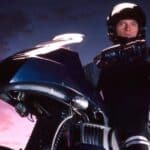
The Spectacular Crash of Street Hawk: How a $1 Million Motorcycle Show Became a Hollywood Nightmare
In 1985, Universal Pictures decided to jump into the futuristic action genre, pouring millions into a super-motorcycle series they hoped would be the next Knight Rider. The resulting venture, Street Hawk, promised impossible speed and high-octane thrills. Instead of cruising down the road, the series crashed and burned after just thirteen episodes, leaving behind a legacy of fiberglass, explosions, and backstage chaos.
Behind the sleek, high-tech veneer, the production quickly devolved into a battlefield of studio panic, reckless design choices, and impossible logistical hurdles. Why did the network change course? What disastrous decisions stripped the creators of their power? And how did the crew manage to keep this high-speed spectacle afloat until the very end?
The roots of the project began with television producer Bruce Lansbury, a veteran who had successfully navigated the waters of science fiction and action programming. Lansbury saw an opportunity to blend the existing trends of high-tech vehicles—like Knight Rider and Airwolf—by focusing on the motorcycle. He teamed up with writers Paul M. Belous and Robert Wolterstorff, a dynamic duo known for crafting compelling action narratives, to bring the concept to life.
Their vision centered on Jesse Mach, a motorcycle cop who was forced to test an experimental super-motorcycle, Street Hawk, after a tragic event. The narrative was pure adrenaline: a damaged cop is recruited to use a futuristic machine to fight crime, pairing him with inventor Norman Tuttle. The premise was gritty, yet visually dazzling.
When the concept reached ABC, immediate friction began. The creators initially pitched the idea as Falconer, but the network favored a safer, more conventional procedural format. This led to a shift in casting, as ABC sought an appealing face for the lead, ultimately choosing Rex Smith, a beloved Broadway star. However, the creators reportedly had another star in mind, George Clooney, demonstrating that the initial creative vision was already colliding with corporate reality.
The casting drama continued when the network decided to replace the original actress. The subsequent choice of Jeannie Wilson, while offering a different dynamic, led to further friction. Television logic dictated that the actress needed to be younger for the role, and that reality often trumped the creative desires of the showrunners.
The physical spectacle of Street Hawk was incredibly ambitious. The motorcycle itself was a logistical nightmare, built from heavily modified Honda bikes and encased in fiberglass shells. Despite the expensive modifications by designer Andrew Probert, the fiberglass frequently cracked and shattered during stunts. The motorcycle needed constant repairs, leading to massive budget strain, reportedly reaching $1 million per episode.
To achieve the illusion of mind-bending speed, the production relied on clever practical filmmaking, not modern CGI. They used special techniques—filming at lower frame rates and employing telephoto lenses—along with hidden air pistons to create the effect of vertical jumps and hyperthrust. It was a triumph of physical stunts and camera tricks over digital effects.
But the real crisis hit when the production spiraled out of control. Frustration simmered over changing demands and poor communication. The pressure culminated in a truly spectacular disaster: a planned explosion stunt, intended for a key sequence, was detonated off-script. The resulting shockwave shattered windows and caused public alarm, triggering a PR nightmare and devastating the remaining trust between the showrunners and the network.
To salvage the series, veteran producers Karen Harris, Stephen Cragg, and Burton Armus were brought in. While they brought expertise, the presence of Burton Armus, a former detective, created further tension, as he clashed with the original creative team. It was Stephen Cragg, however, who stepped up as the logistical hero, implementing strict cost-saving measures and a six-bike rotation system to keep the expensive stunt work moving forward.
Street Hawk ultimately succumbed to network interference and insurmountable production costs. Though the show was canceled after thirteen episodes, its legacy endures as one of television history’s great “what ifs.” It remains a fascinating reminder that sometimes, the most spectacular stories are not just about the action, but about the perilous journey of creation.
Buy on Amazon
Credit