
Boorman and the Devil review Exorcist 2 documentary treatment
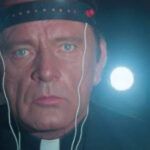
The Price of Failure: Diving into the Making of Exorcist II
In the world of cinema, there is a stark difference between celebrating a massive hit and dissecting a spectacular flop. Usually, the latter is shrouded in silence, as those involved with cinematic failures are often reluctant to speak about them. However, David Kittredge’s documentary Boorman and the Devil manages to pull back the curtain on a monumental cinematic blunder, offering an intimate look at the making (and unmaking) of Exorcist II: The Heretic.
This deep dive benefits immensely from one crucial factor: the director, John Boorman, is not just a subject but an open, willing participant. Along with many surviving cast members, including Linda Blair and Louise Fletcher, they recorded extensive interviews, giving a unique perspective on a film that remains a notorious misstep.
When discussing cinematic failures, the easy answers are often studio interference or indifferent markets. But for Boorman, the story of Exorcist II is far more personal. He acknowledges that despite having the largest budget of his career and mostly supportive studio backing, the film went wrong. Boorman admits that his misstep was making a sequel to something like The Exorcist, driven by an aim to explore the power of good rather than the power of evil—a vision that ultimately disappointed audiences.
Boorman reveals that he felt he was the wrong person to tackle this kind of material. He admits that his failure stemmed from not understanding or caring what the audience truly wanted from the film. In fact, after the film premiered, he panicked and made drastic changes, creating a new version for international release that he later acknowledged was a significant mistake.
The weight of the failure falls squarely on the director’s shoulders, though the film is studded with praise for the talent involved. Linda Blair, who faced considerable criticism for her performance, and Louise Fletcher, who still spoke fondly of the process, both navigated the turbulent waters of production. While Richard Burton was involved, Boorman noted that the actor seemed largely uninvested, content simply to execute the director’s vision without bringing his own ideas to the role.
Watching the documentary reveals that the perceived flaws in Exorcist II were largely authored by Boorman himself, aided by creative collaborator Rospo Pallenberg. The pursuit of a dreamlike film resulted in disastrous choices, from insisting on certain sequences to demanding specific performances that ultimately proved to be creatively stifling.
Yet, the film is not entirely a somber reflection of error. Some talking heads in the documentary find merit in the work, even if they don’t celebrate it as a masterpiece. Mike Flanagan, currently directing his own Exorcist movie, points to the film’s merits, highlighting the dynamic cinematography by William A. Fraker and the evocative score by Ennio Morricone. He seeks to guide audiences toward appreciating the film’s core strengths, even acknowledging that as a sequel, it ultimately falls short.
Ultimately, the story of Exorcist II: The Heretic is a powerful reminder that passion and good intentions don’t always equate to successful execution. It proves that even in the pursuit of cinematic ambition, the reality of filmmaking often involves spectacular failures—and sometimes, those failures are the most engaging stories of all.
Buy on Amazon
Credit