Nicolas Winding Refn: I’d been given a gift to start over again
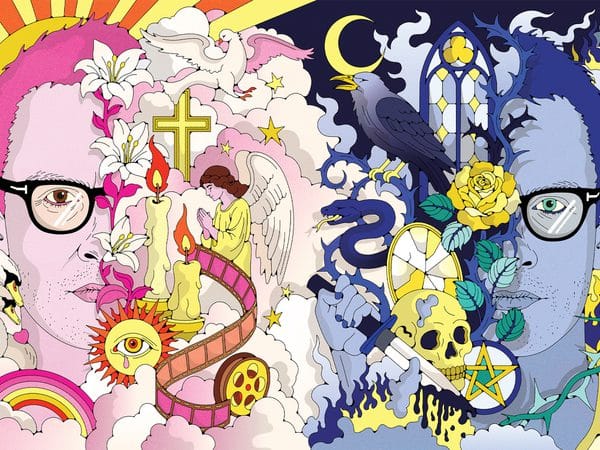
Nicolas Winding Refn returns to the screen and from the grave with a neon-drenched fable that explores the intense, often agonizing, bond between a father and daughter. His latest work, Her Private Hell, is a stunning climax of his career, weaving together grandeur and minimalism into a cinematic experience that is simultaneously dreamlike and devastating.
To step into the worlds Refn has constructed—from the stark neo-noir of Drive and The Neon Demon to the visceral tension of Pusher and Valhalla Rising—is to encounter a unique sensory overload. Drenched in vibrant blues and pinks, these films are defined by exquisite blocking, dreamlike scores, and scenarios that refuse to be ignored, offering an utterly entrancing cinematic journey.
While Refn is often noted for immersing himself in these aesthetics, the true magic lies in how he uses the visual and auditory medium to explore deeper human truths. His approach is a testament to continuous evolution, shifting between theatrical realism and unsettling, alien landscapes.
The genesis of Her Private Hell was less a planned trajectory and more a sudden eruption of creative necessity. Refn himself discovered that death and revival had acted as a profound catalyst, granting him a fresh sense of desire and a new perspective on the audiovisual medium. He began seeking to channel this renewed energy into cinema, viewing it as a canvas for expression.
This shift was rooted in his early fascination with television, which he saw as a kaleidoscopic experience—a dream machine where flickering channels offered a chaotic yet captivating array of sensory input. He envisioned a film that mirrored that initial, immersive experience of watching the world shift in real-time.
To bridge his initial vision—the meeting of opposite spectra—Refn sought an antagonist that could unify his themes. He pulled in figures like the Leatherman, coded with a glam-monster sensibility, creating a triangle of conflict centered on the father-daughter dynamic. This structure allowed him to craft a narrative that felt less like a simple story and more like an opera on film, where tragedy and operatic scope dominate the emotional arc.
Refn’s work frequently explores themes of power, possession, and the loss of control, often focusing on hands and eyes—tools of touch and sight that define his craft. Whether in Only God Forgives or Her Private Hell, these elements are tied to the pursuit and subsequent loss of authority.
When faced with the criticism that his films might be too cold, Refn found his balance by experimenting with the juxtaposition of the natural and the unnatural. By combining the grounded authenticity of films like Pusher with the otherworldly tension of works like Bronson and Valhalla Rising, he found a compelling middle ground.
As his life progressed, Refn continued to evolve, exploring new realms like The Neon Demon and later experimenting with the structure of streaming services. These explorations taught him that the metric for “greatness” is subjective. He learned that not everything needs to be perfectly “great”; sometimes, what is “good” is more than enough.
His recent journey, marked by death and rebirth, has fundamentally reshaped his understanding of time and existence. He now views his creativity as a spiritual act, a form of exorcism and cleansing. He suggests that true spiritual connection—the seeking of higher powers—is achieved through stillness and silence, allowing the senses to heighten and revealing alternative perspectives.
Ultimately, Refn’s artistic endeavor becomes a profound confession: an endless cycle of creation and re-evaluation. Facing the ultimate reality of mortality, he seeks an ultimate truth, realizing that the act of self-exploration and art is a powerful, repetitive process. It is in this ongoing journey that he finds a new, formidable sense of freedom.
Buy on Amazon
Credit