
Lucas cut a scene that completely changed the Jawas
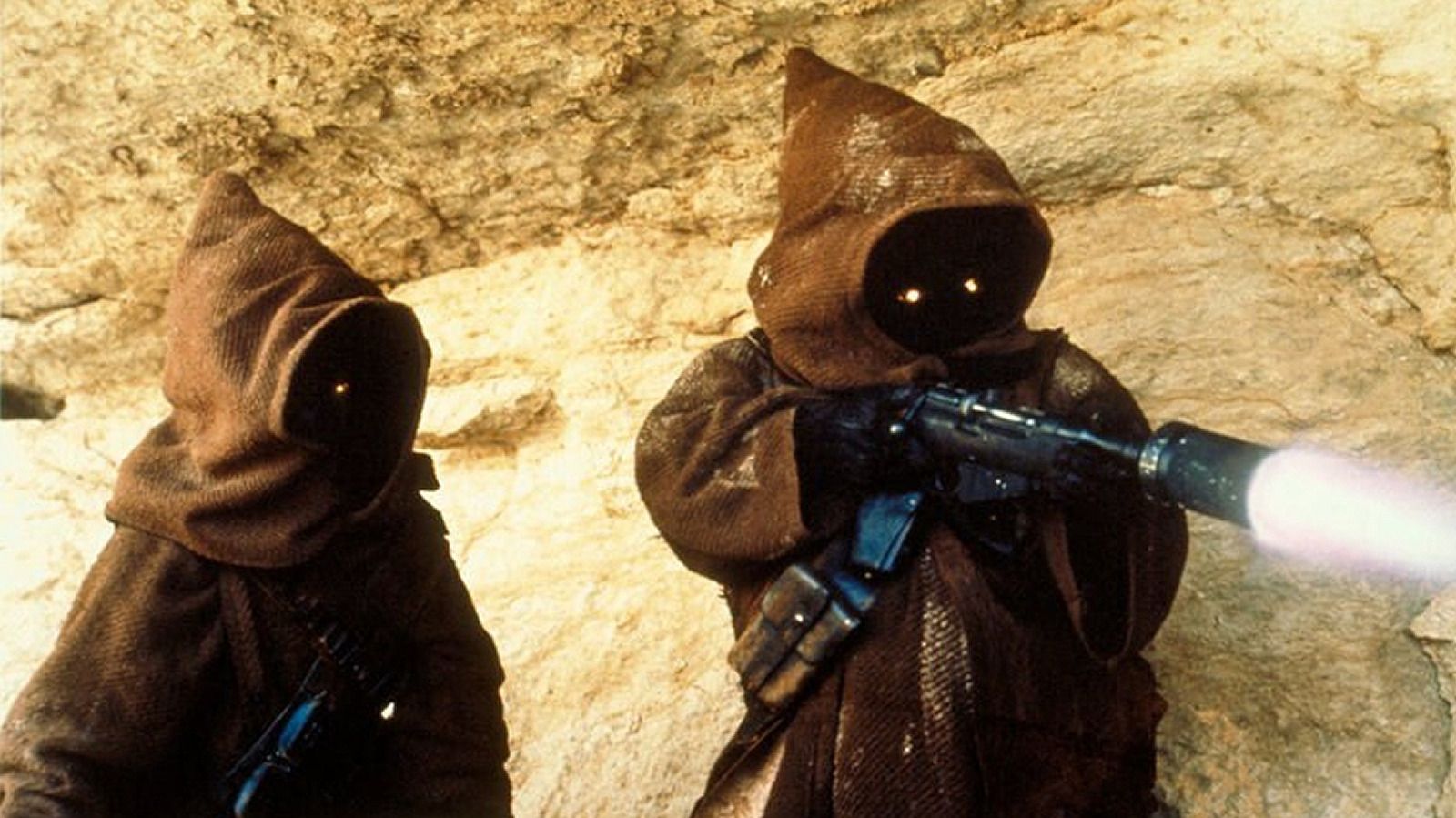
When you think of the gritty expanse of the Star Wars galaxy, your mind immediately conjures images of legendary spaceships, epic battles, and hardy inhabitants. Among these diverse species, the desert-dwelling Jawas hold a unique place as nomadic scavengers, masters of the dunes and the forgotten wrecks.
Yet, the origins of this iconic group reveal a subtle but significant shift in their storytelling. While they are firmly established in the galaxy as wandering opportunists, the initial concepts for the characters provided them something far more rooted than mere nomadic existence.
In the original script drafts that laid the foundation for these legendary creatures, the Jawas were envisioned not just as wanderers but as inhabitants of a specific place. They were given a village—a home to return to, a fixed point in the vastness of the desert setting.
This distinction between being purely nomadic scavengers and having a defined community adds a layer of depth to their character. It transforms them from simple survivalists into people with history, ties, and a sense of belonging, even as they continue their journey across the stars.
It is this subtle narrative choice that enriches the mythology of Star Wars. The contrast between their current identity as roaming scavengers and their initial concept as village dwellers highlights the evolution of how fictional worlds build their characters—giving them both freedom to roam and a history to carry.
Credit