
End of Oak Street Reviews Revealed
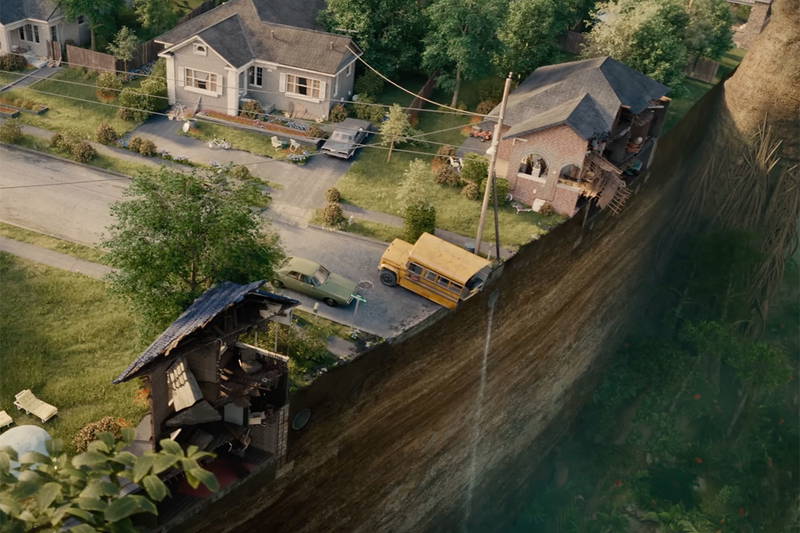
When a cosmic event rips your familiar suburban streets away and deposits you into an unknown, almost prehistoric landscape, survival becomes the only mandate. That is the high-stakes premise of David Robert Mitchell’s mystery thriller, The End of Oak Street, a film that manages to blend epic spectacle with deeply nostalgic storytelling.
The journey begins for the Platt family, who are suddenly marooned in an unrecognizable world. Their survival hinges not just on navigating bewildering new geography, but on maintaining their unity amidst the chaos of a reality that defies all known physics.
But beyond the immediate peril, The End of Oak Street is clearly designed to be more than just a cinematic escape. Produced by J.J. Abrams, the film acts as a delightful homage to the golden age of Spielberg and the Amblin school of filmmaking, drawing strong lines from classics like The Goonies and Gremlins.
This reverence for cinematic history is where the film finds its charm—or perhaps, some find its friction. Critics have weighed in on this masterful mashup, offering a spectrum of reactions that range from celebrating the witty nostalgia to critiquing the execution.
Some reviewers praise the film as a crowd-pleasing homage, noting how it captures the “sweet menace” and carefree fun of 1980s blockbusters. They see it as a successful revival of bygone techniques designed for pure summer entertainment.
Others look deeper into the mechanics of the filmmaking, arguing that while the references are plentiful, the film sometimes prioritizes imitation over originality. Concerns have been raised about whether the spectacle overshadows genuine creativity, with some suggesting the film is merely a running buffet of better movies rather than a truly original vision.
The debate centers on where the line between homage and replication lies. Is it clever tribute, or just flagrant copying? One perspective suggests that while the film leans heavily into its retro influences, it struggles to escape the shadow of those classics, raising questions about seeking genuine novelty in modern filmmaking.
Despite these critical discussions, the sheer imaginative scope of The End of Oak Street remains compelling. It asks big, dramatic questions while wrapping them in a familiar, energetic package, positioning itself as a unique summer thrill ride that demands attention.
The End of Oak Street is set to arrive in cinemas on August 14th, promising audiences a journey that is both wildly imaginative and deeply rooted in cinematic history.
Buy on Amazon
Credit